
Baby bed bugs, called nymphs, are tiny, pale, oval insects from about 1.5 mm to 4 mm long. They look like small versions of adult bed bugs and turn reddish after feeding. Their eggs are white grains about 1 mm long. Finding either means breeding is happening, and treatment must target every stage.
Most people never see a baby bed bug. They are small, nearly see-through and hide in the same places as adults. This guide shows you what to look for at each stage, with a size guide, a life cycle table, and a list of look-alike insects that are often mistaken for them. It then explains how to kill every stage, including the eggs.
In this guide: what a nymph looks like, instar size guide, bed bug eggs, shed skins, life cycle, how to find them, look-alikes, bites, how to kill every stage, when to call a professional, and FAQs.
1. What do baby bed bugs look like?
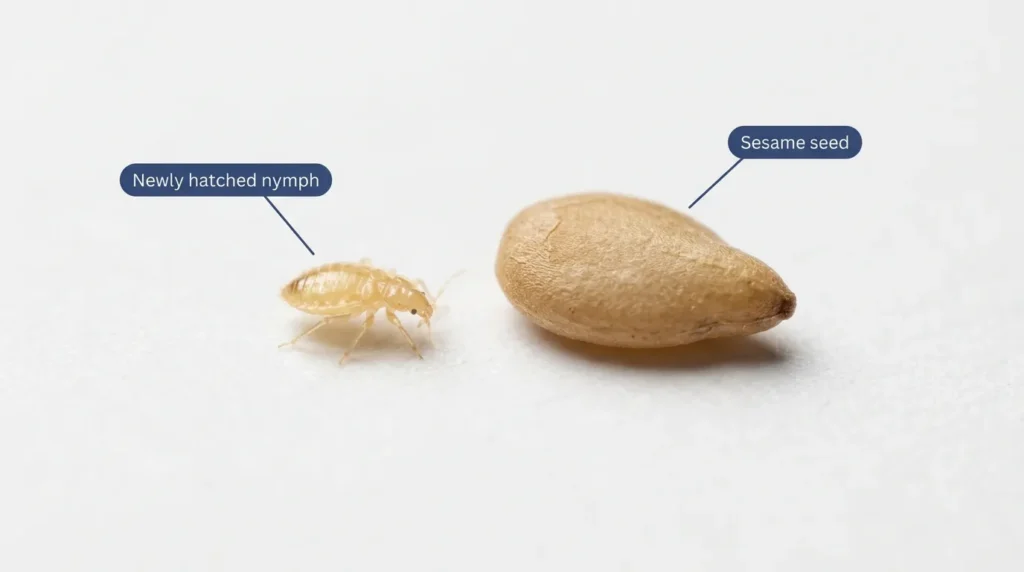
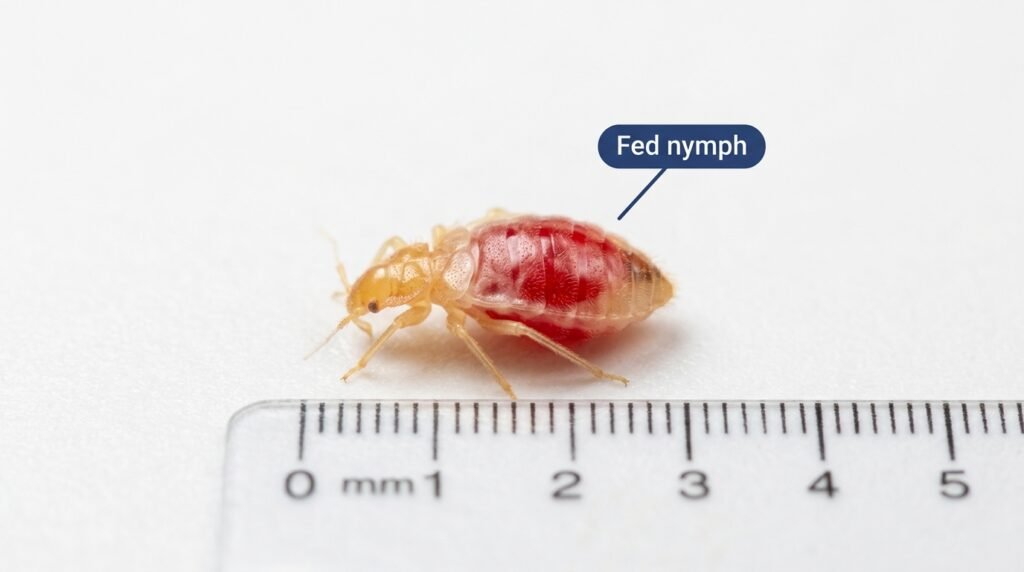
A baby bed bug (nymph) has the same flat, oval shape as an adult, but it is smaller and lighter in colour. Newly hatched nymphs are nearly colourless or pale yellow-white, so they blend into light sheets and mattress fabric. After a blood meal, the body swells and the gut shows red or dark, which is when they are easiest to spot.
Key features to look for:
- Size: from about 1.5 mm (a sesame seed) after hatching to about 4 mm just before adulthood.
- Colour: pale cream or straw yellow, becoming reddish-brown as they grow, and a bright red or dark patch after feeding.
- Shape: oval, flat, with six legs and a small head with antennae. No wings.
- Movement: slow compared to cockroaches. They crawl and do not jump or fly.
- Location: mattress seams, piping and tags, headboard joints, bed frame cracks, sofa seams and behind skirting.
2. Size guide: bed bug stages from egg to adult
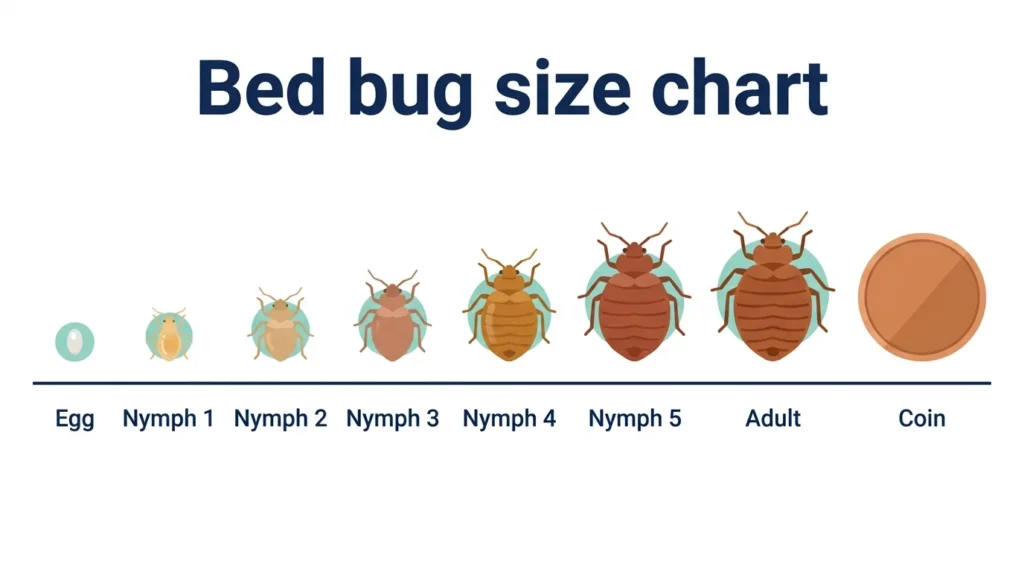
Bed bugs go through five nymph stages, called instars. They must have a blood meal before each molt, which is why baby bed bugs bite. The sizes below are approximate and vary between bugs:
| Stage | Approx. size | Colour | Looks like |
|---|---|---|---|
| Egg | About 1 mm | Pearly white | A tiny grain, about the size of a pinhead |
| Nymph, 1st instar | About 1.5 mm | Almost see-through, pale yellow-white | A sesame seed |
| Nymph, 2nd instar | About 2 mm | Cream, pale yellow | A small pale seed |
| Nymph, 3rd instar | About 2.5 mm | Light tan | A small apple pip |
| Nymph, 4th instar | About 3 mm | Tan to light brown | A flat lentil |
| Nymph, 5th instar | About 4 mm | Brown, reddish after feeding | Almost adult size |
| Adult | 4 to 5 mm | Reddish-brown | An apple seed |
3. What do bed bug eggs look like?
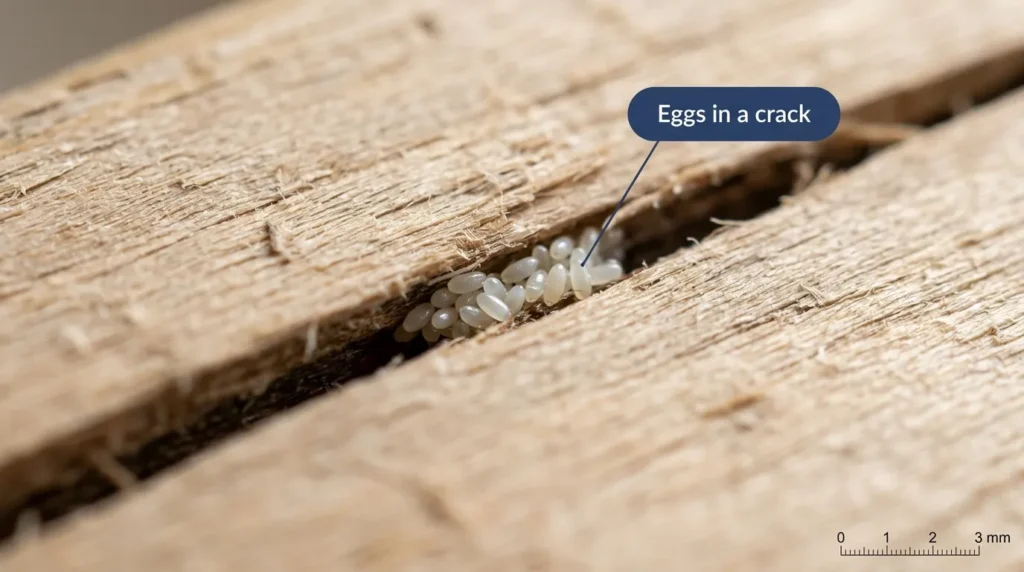
Bed bug eggs are tiny, oval and pearly white, about 1 mm long. A female lays them in cracks and crevices, often in small clusters, and glues them in place. Because they are so small and pale, they are easy to miss on white or cream bedding.
- Where to look: mattress seams and tags, inside bed frame joints, under the headboard, behind loose wallpaper and along skirting near the bed.
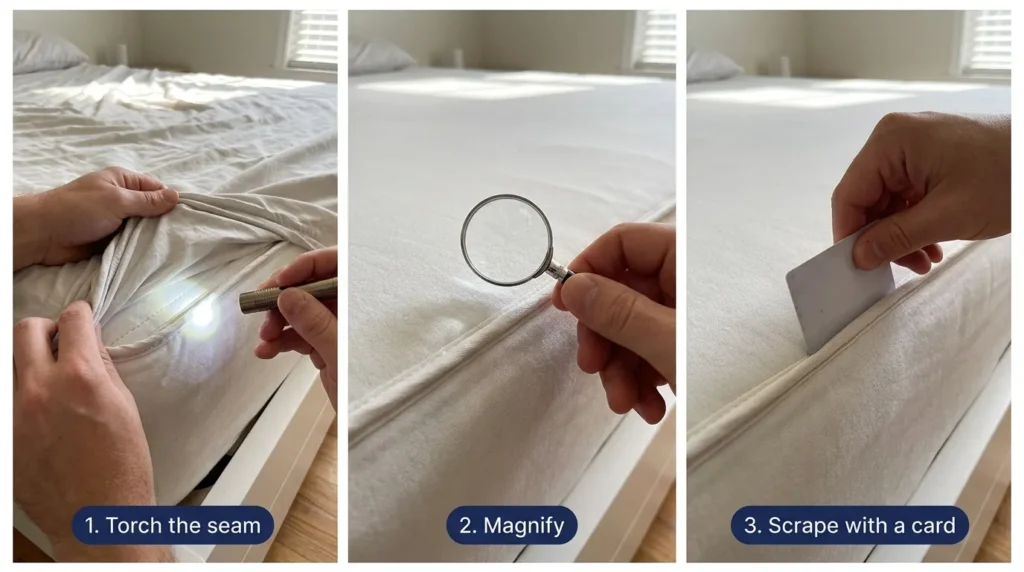
- How to see them: use a torch held at a low angle, a magnifier and an old credit card to run along seams. Eggs shine slightly in the light.
- Hatching: in warm rooms the eggs can hatch within about ten days, which is why you can see new nymphs soon after a treatment that missed the eggs.
- Empty eggs: hatched eggs look like tiny, pale, hollow shells with a cap at one end.
4. Shed skins: the easiest sign to find
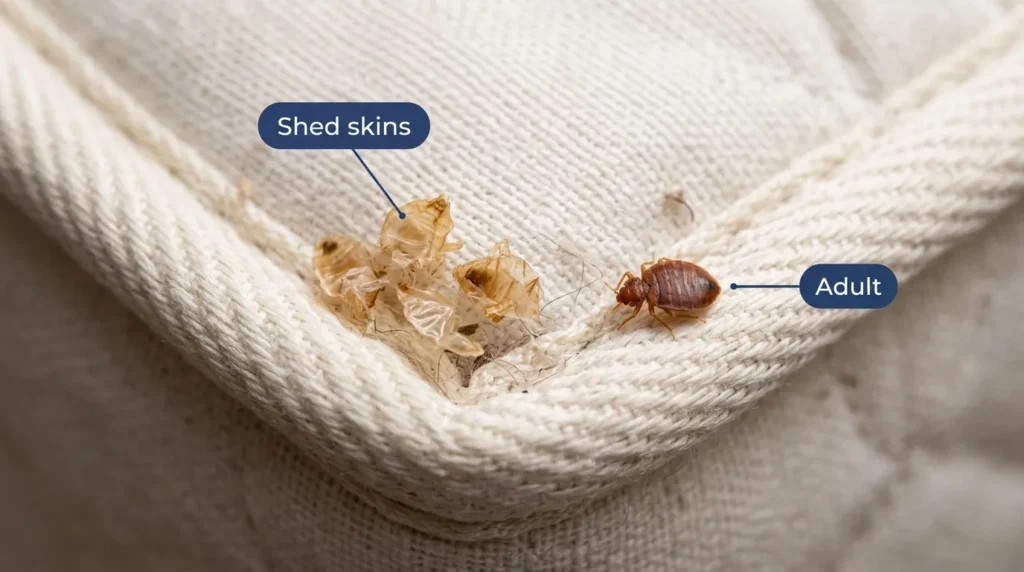
Each time a nymph molts, it leaves behind a pale, hollow skin that keeps the shape of the bug. Shed skins are larger than eggs and easier to see than nymphs. Finding several in a mattress fold, behind the headboard or in a drawer suggests that young bed bugs are growing nearby. They are one of the clearest signs of a breeding population, even if you have not seen a single live bug.
5. The bed bug life cycle
| Stage | What happens | Typical timing in warm conditions |
|---|---|---|
| Egg | Laid in cracks and glued in place | Hatches in about 6 to 10 days |
| Nymph (5 stages) | Needs a blood meal before each molt, then grows and sheds its skin | Several weeks, depending on warmth and access to blood |
| Adult | Mates, feeds and lays eggs | Lives for months and can survive for long periods without feeding |
In warm homes, bed bugs can reach adulthood in as little as a month or so. The UAE’s air-conditioned, warm interiors keep conditions good all year, which is why bed bugs here do not slow down in winter.
6. How to check for baby bed bugs (step by step)
- Strip the bed and check sheets and pillowcases for blood spots and dark specks.
- Check the mattress seams and piping on all sides, then the tag and corners.
- Check the box spring or base, including the underside and any dust cover.
- Check the headboard and bed frame joints and screw holes.
- Check sofas, chairs and bedside tables within a few metres of the bed.
- Use a torch and magnifier to look for eggs, nymphs and shed skins.
- Take photos of anything you find. They help the technician confirm the pest.
[IMAGE 8: Step-by-step photo strip showing a person checking a mattress seam with a torch, a magnifier and a card. Alt text: How to check a mattress for baby bed bugs and eggs using a torch and magnifier. File name: how-to-check-mattress-baby-bed-bugs-eggs.webp]
7. Look-alikes: what else could it be?
| Insect | How it differs from a baby bed bug |
|---|---|
| Carpet beetle larva | Hairy or bristly, striped, found on fabrics and carpet |
| Cockroach nymph | Longer, more elongated body, long antennae, runs fast and flees light |
| Flea | Dark, narrow, jumps. Mainly on pets, bedding and carpets |
| Booklouse | Very small and pale, soft body, found in damp paper and cardboard |
| Tick | Round when fed, eight legs, lives on pets and animals |
If you cannot tell, catch one in clear tape, take a sharp photo and send it to us on WhatsApp. Our technician can confirm it.
8. Do baby bed bugs bite?
Yes. Nymphs feed on blood just like adults, and they need a meal at each stage to grow. Their bites look the same as adult bites: small itchy bumps, often in lines or clusters on skin that is exposed while you sleep. Some people do not react at all, so bites alone cannot prove that bed bugs are present. Look for the signs described above, and see our guide to bed bugs in Sharjah for a bite comparison table.
9. How to kill baby bed bugs and eggs
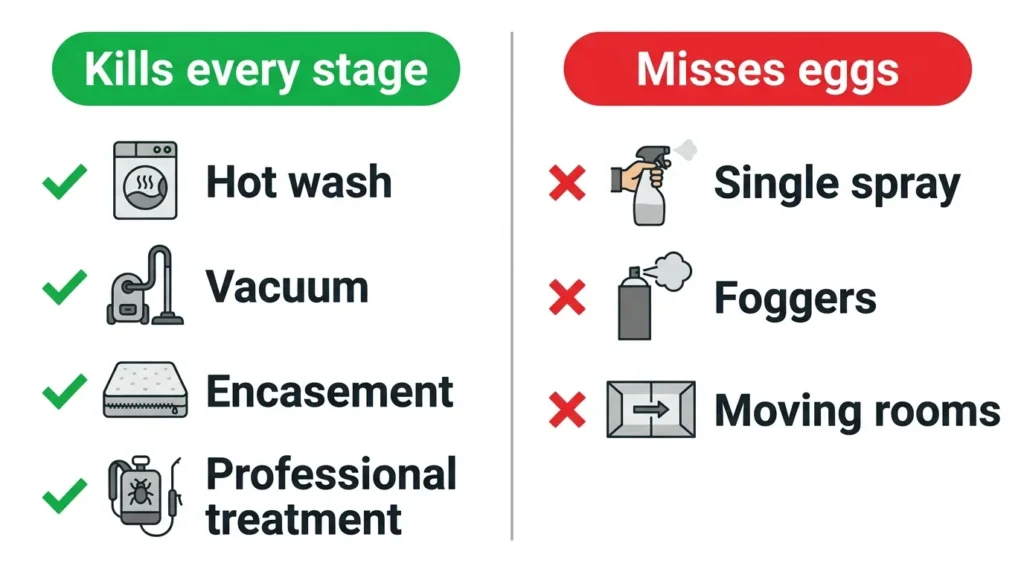
Any treatment that kills adult bed bugs also works on nymphs. The difficult stage is the egg, because some products do not kill eggs. That is why one spray often leaves a few survivors that hatch and restart the problem. A plan that works has to deal with every stage and include a follow-up.
What you can do yourself
- Hot wash and dry. Wash bedding, covers and clothes on a hot cycle and dry on high heat for at least 30 minutes. Heat kills eggs, nymphs and adults.
- Vacuum slowly along seams, frames and skirting, then empty the vacuum into a sealed bag outside.
- Use mattress and box spring encasements to trap bugs and make inspection easier.
- Seal and declutter. Reduce hiding places, seal cracks and keep clothes off the floor.
What does not work
- Foggers and bug bombs, which can scatter bugs into other rooms.
- Repeated store-bought sprays, which miss eggs and can help bugs develop tolerance.
- Moving to another room, which carries the problem with you.
- Throwing out the bed without treating the room. The bugs are also in the frame, walls and furniture.
What a professional treatment does
- Site survey and inspection of the bed, furniture, sockets and skirting.
- Pest identification and risk rating from low to critical.
- Custom treatment plan for your room or property type.
- Targeted treatment of every place bed bugs hide, using approved products.
- Follow-up checks. We re-check after 3 days and again after 2 weeks, because eggs can hatch after treatment.
Our treatments come with a 3-month warranty. See our bed bug control service and our guide to bed bug pest control in Sharjah.
10. When to call a professional
- You find baby bed bugs, eggs or shed skins in more than one place.
- You see live bugs in the daytime.
- You have already tried sprays and bugs return.
- You live in an apartment building and a neighbour has bed bugs.
- You manage a hotel, rental, labour accommodation or serviced apartment.
We treat bed bugs in homes and businesses across Dubai and Sharjah. See pest control in Dubai and pest control in Sharjah.
11. Frequently asked questions
What size are baby bed bugs?
From about 1.5 mm when newly hatched to about 4 mm just before adulthood, while adults are 4 to 5 mm.
What colour are baby bed bugs?
Nearly colourless or pale yellow-white at first, then tan to brown as they grow. They look red or dark after feeding.
Can you see bed bug eggs with the naked eye?
Yes, but only just. They are about 1 mm long and pearly white. A torch, magnifier and a card to run along seams make them much easier to find.
How long do bed bug eggs take to hatch?
In warm conditions, eggs can hatch in about 6 to 10 days.
Do baby bed bugs bite?
Yes. They need blood to molt and grow, so they bite just like adults.
How fast do baby bed bugs grow up?
In warm homes, from about a month to several weeks longer, depending on how often they can feed.
Does one baby bed bug mean an infestation?
It means that bed bugs have been breeding, because nymphs come from eggs laid by an adult. Check carefully and get an inspection.
Do bed bug sprays kill the eggs?
Many do not. That is why professional treatment includes follow-up visits to catch bugs that hatch afterwards.
Can baby bed bugs spread diseases?
Bed bugs are not known to spread disease, but bites can itch badly and scratching can cause skin infection. See a doctor if a reaction spreads or does not settle.
Book a free bed bug inspection
Found baby bed bugs, eggs or shed skins? Aura Pest Control offers same-day appointments and 24/7 emergency support across Dubai and Sharjah.
- WhatsApp: +971 52 408 0230
- Call: +971 52 408 0230
- Email: info@aurapestcontrol.ae
- Contact us | Bed bug control