
You’ve found small reddish-brown bugs in your mattress seams, or you’re waking up with unexplained bite marks — and your first instinct is to grab a bed bug spray from Lulu or Carrefour. Before you do, it helps to know what these sprays can actually kill, where they consistently fail, and when a can of spray simply isn’t enough to solve the problem.
This guide covers every method people in the UAE use against bed bugs — sprays, powders, heat, and professional treatment — what each one is actually good for, where bed bugs hide in UAE homes, a step-by-step removal process, and the Dubai Municipality rules most guides don’t mention.
Do Bed Bug Sprays Actually Work?
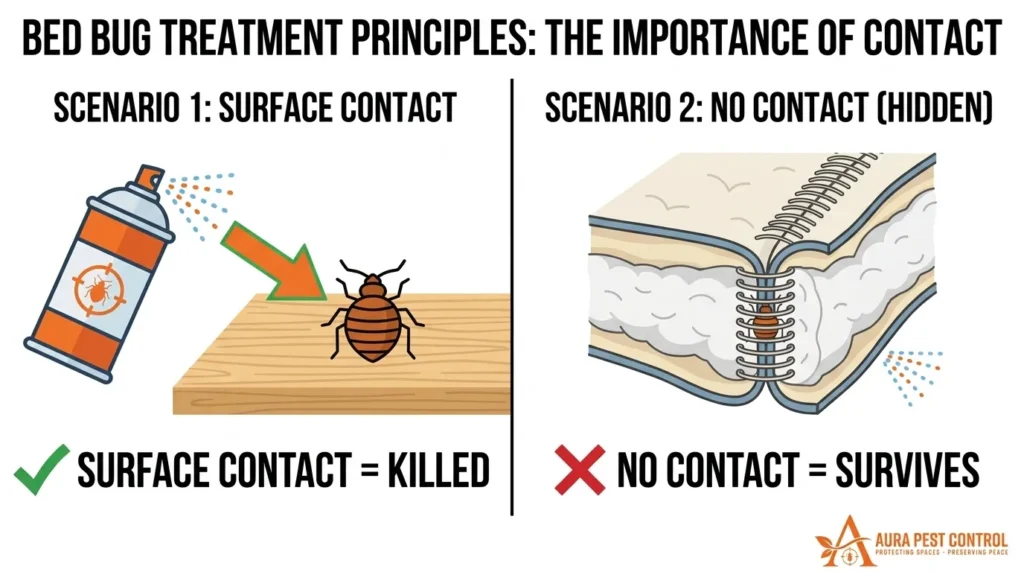
Short answer: yes, but only on contact, and only on bugs you can actually reach.
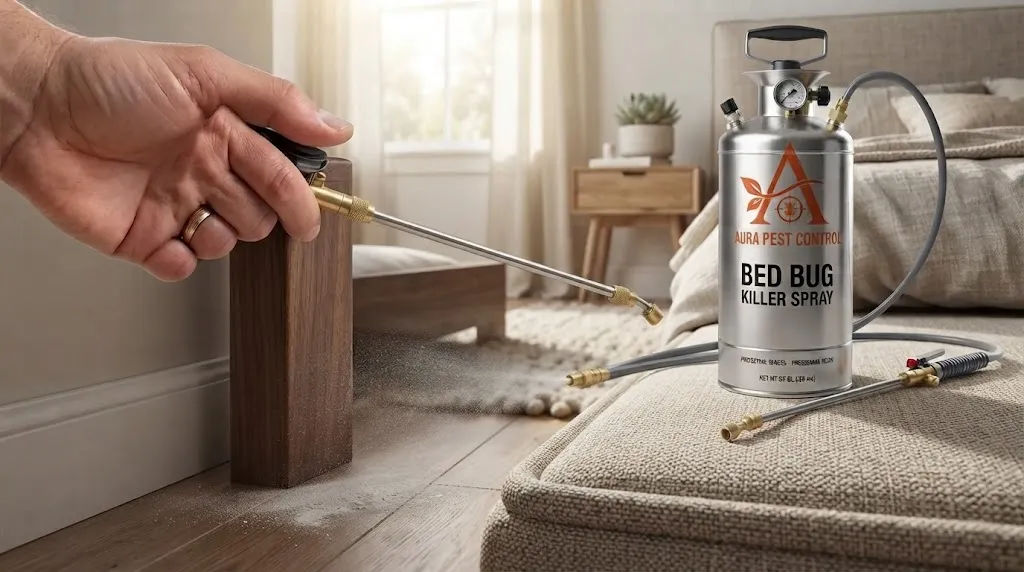
Most bed bug killer sprays sold in UAE supermarkets (Lulu, Carrefour, Union Coop) use pyrethroid-based active ingredients — the same class of chemical found in household insect sprays. These work by attacking the bed bug’s nervous system on direct contact. Sprayed directly onto a bug or its eggs, a pyrethroid-based spray will kill it effectively.
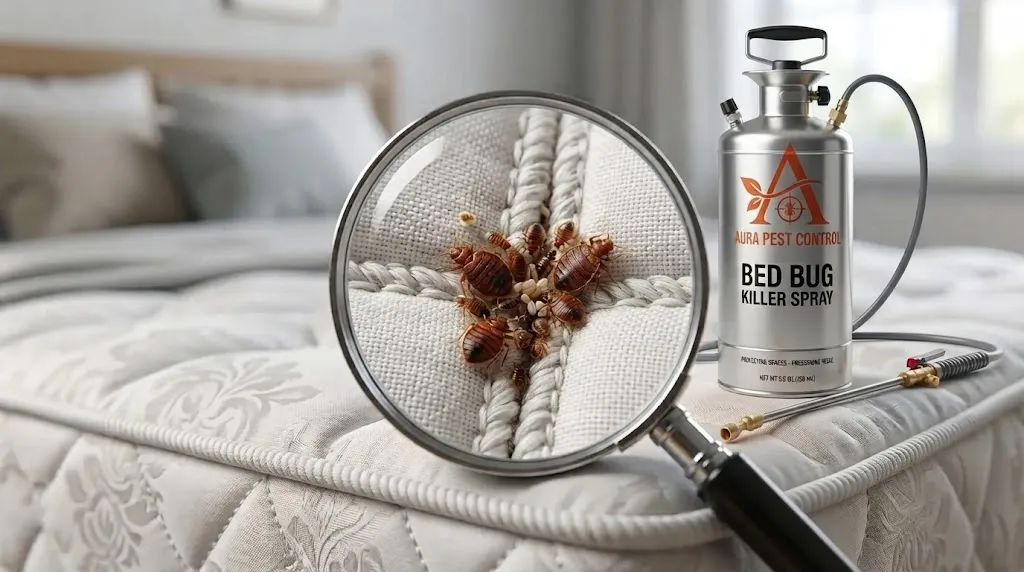
The problem isn’t the chemical — it’s where bed bugs actually live. Bed bugs spend most of their life cycle hidden deep inside cracks, seams, and voids: behind headboards, inside bed frame joints, under skirting boards, and tucked into mattress piping. A spray only kills what it physically touches, so any bug sitting a few millimetres back from the surface — which is most of them — survives completely untouched.
This is also why “what kills bed bugs instantly” searches are so common: people expect one spray application to end the problem, and are surprised when bites continue a week later. Instant knockdown on contact is real; instant elimination of a whole infestation from a single spray session is not.
Types of Bed Bug Killers: Sprays, Powders, Heat and Professional Treatment
Rather than relying on one method, it helps to understand what each actually does — and where it fits into getting rid of an infestation completely.
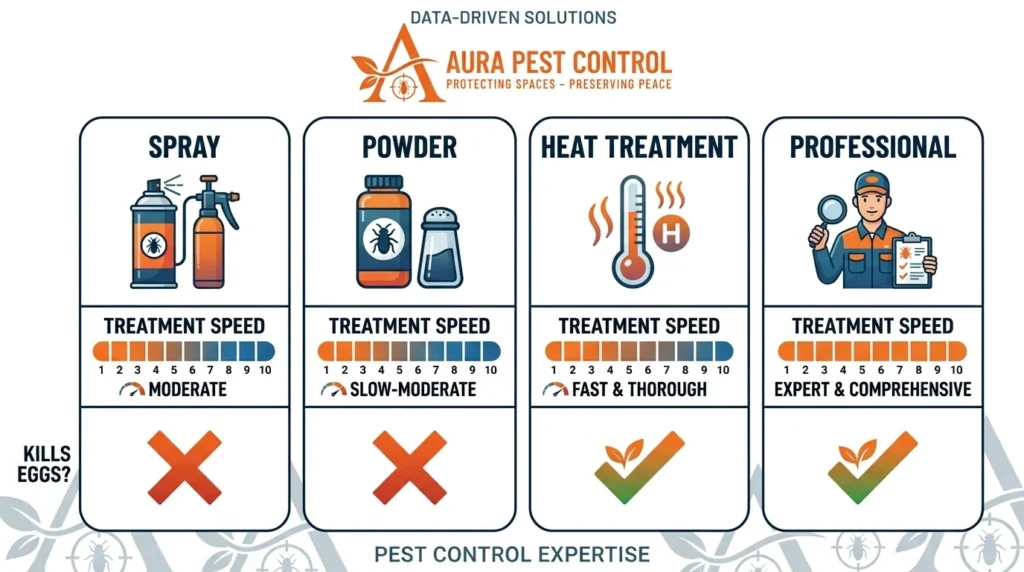
Bed bug killer spray
Fast, available everywhere (Lulu, Carrefour, Union Coop, Amazon.ae), and effective on direct contact. Best used on bugs you can see, and as a supporting measure alongside other methods — not as a standalone solution for an established infestation.
Bed bug powder (desiccant dust)
Unlike sprays, bed bug killer powder doesn’t poison the bug chemically — it works by damaging the bug’s waxy outer shell, causing it to dehydrate and die over several days. Common active ingredients sold in the UAE include diatomaceous earth and silica gel-based dusts (Katmel bed bug powder is a widely available local brand). Powder’s advantage is that it keeps working for days or weeks after application and can be puffed into cracks and voids that sprays can’t effectively treat. The trade-off: it’s slower, and it’s messy if overused — a light, even dusting works better than a thick layer.
Heat treatment
Professional bed bug heat treatment in Dubai raises the temperature of an entire room (or the whole property) to a level bed bugs and their eggs cannot survive — typically well above what any spray or powder reaches. This is the only method that reliably kills eggs and bugs hiding deep inside furniture, walls, and electronics in a single session, which is why pest control companies increasingly offer it as a premium option for serious infestations.
Professional chemical treatment
Dubai Municipality-approved pest control companies use professional-grade, higher-concentration insecticides than anything sold over the counter, combined with trained technicians who know exactly where to inspect and treat. Most reputable companies also require a second visit roughly two weeks later, since freshly hatched eggs from the first treatment need a follow-up application to catch.
Bed Bug Powder: How It Works and Its Limits
Because powder gets far less attention than sprays, it’s worth a closer look. Bed bug killer powder is applied as a thin layer along skirting boards, inside electrical outlet covers, along bed frame joints, and around the perimeter of the room — anywhere bugs travel on foot. As they crawl through it, the desiccant dust scratches and dries out their protective outer layer.
The limits: powder doesn’t work well on damp or humid surfaces (it clumps and loses effectiveness — a relevant issue in UAE homes with high humidity, especially near windows or AC units), and it won’t instantly kill on contact the way a spray does. It’s a slow, background method best combined with spray treatment on visible bugs and heat or professional treatment for a confirmed infestation.
Where Bed Bugs Hide: Mattress, Sofa, Curtains and Carpet
Knowing exactly where to look — and treat — is often the difference between solving the problem and only pushing bugs into a different hiding spot.
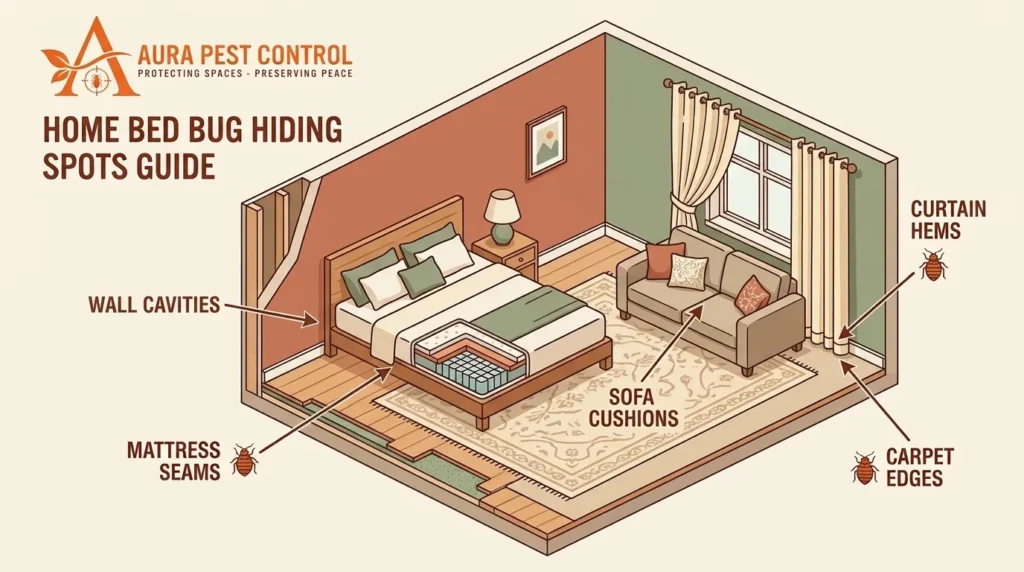
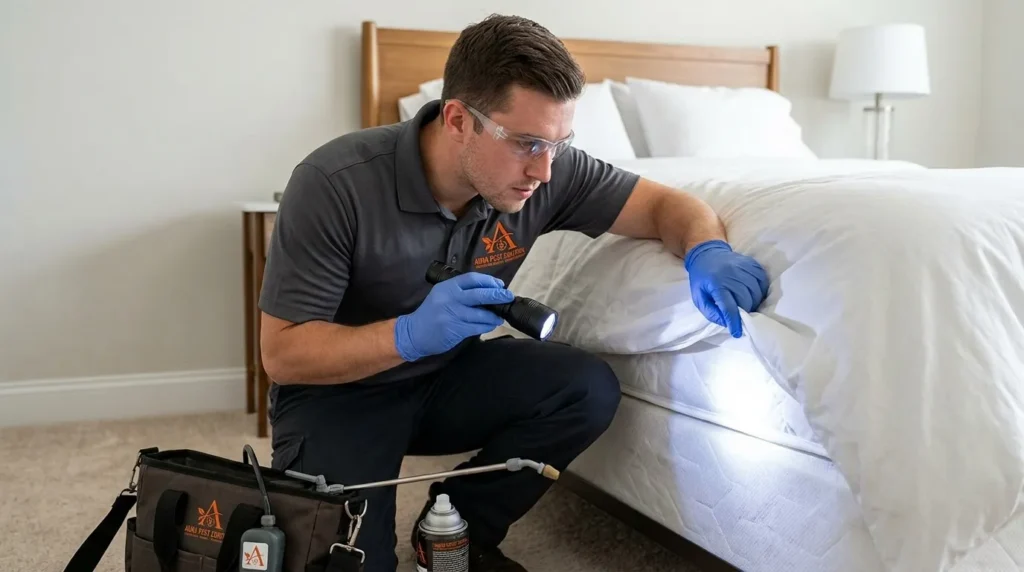
Inside the mattress. The most common hiding place is along the piping and seams of the mattress itself, plus the underside and the box spring. A flashlight and a close inspection of every seam is the starting point for any treatment.
In sofas. Bed bugs in sofa cushions hide in the same way — along seams, inside zippers, and in the gap where the cushion meets the frame. Sofas near a bedroom or used for guest sleeping are a common secondary infestation point people overlook.
On curtains. Bed bugs on curtains tend to cluster along the top pleats and hems rather than spreading across the fabric — another reason a quick glance usually misses them.
In carpet. Can bed bugs live in carpet? Yes, though less commonly than in soft furnishings — they can shelter along the edges where carpet meets the wall or baseboard, particularly in a heavily infested room.
How to Get Rid of Bed Bugs in Dubai: Step by Step
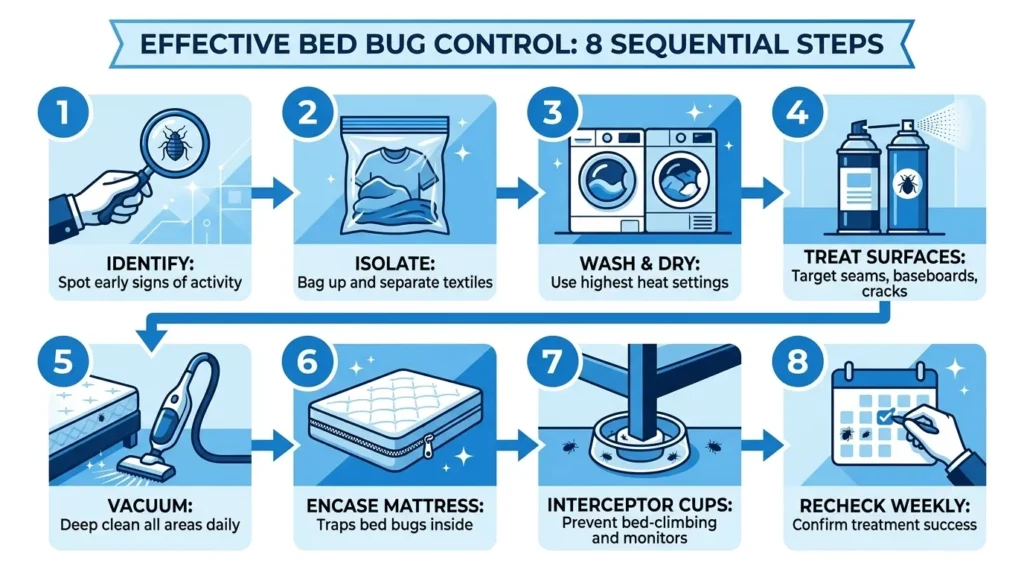
- Identify the infestation. Check mattress seams, bed frame joints, behind headboards, skirting boards, electrical sockets, and furniture joints using a flashlight or magnifying glass. Look for live bugs, dark spotting (droppings), shed skins, and small pale eggs.
- Isolate affected items. Strip bedding, curtains, and any washable fabric immediately and place them in sealed plastic bags to stop bugs spreading to other rooms.
- Wash and heat-dry everything washable. Hot water wash followed by a full cycle in a hot dryer kills bed bugs and eggs on fabric. Items that can’t be washed can be sealed in a bag and left in direct sun inside a closed car for several hours, or placed in a dryer on a hot setting for 30 minutes.
- Treat hard surfaces and cracks. Apply bed bug killer spray directly onto any visible bugs and into accessible cracks and joints. Follow with bed bug killer powder along skirting boards, bed frame joints, and furniture legs for ongoing protection.
- Vacuum thoroughly. Vacuum the mattress, bed frame, carpet edges, and surrounding floor area, then immediately seal and dispose of the vacuum bag or empty the canister outside the home.
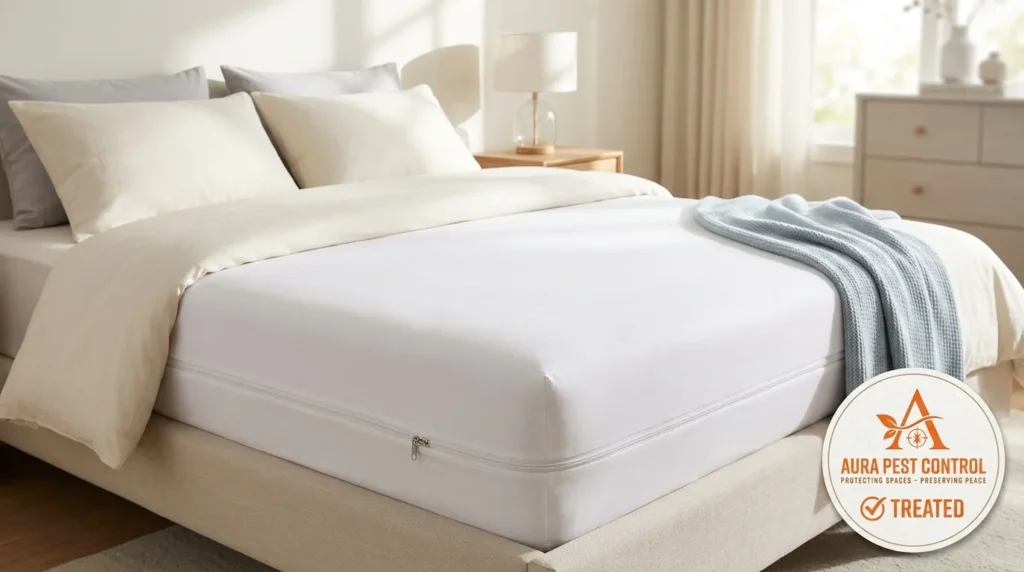
- Encase the mattress. A hypoallergenic, bed bug-proof mattress and box spring encasement traps any surviving bugs inside and stops new ones from getting in or out.
- Set interceptor cups under bedposts. These small traps sit under each leg of the bed and catch bugs trying to climb up or down, giving you an easy way to monitor whether the infestation is improving.
- Recheck weekly. Bed bug eggs take about a week to hatch, so a single treatment round is rarely enough — inspect the same areas again after 7 days and reapply spray or powder as needed.
Why Store-Bought Sprays Fail, and When to Call a Professional
Store-bought sprays and foggers (“bug bombs”) share the same fundamental limitation: they only kill what they directly touch, and foggers in particular often just scatter bugs deeper into wall voids and furniture rather than eliminating them. If you’ve gone through the full DIY process above and are still finding live bugs or fresh bites after two to three weeks, that’s the clearest sign the infestation has spread beyond what spray and powder alone can reach.
At that point, it’s worth calling in a Dubai Municipality-approved pest control company. Professional bed bug control dubai services typically include a full property inspection, a treatment plan combining professional-grade chemical application with heat treatment where needed, and a mandatory second visit two to three weeks later to catch newly hatched eggs — something a single can of spray simply cannot replicate.
UAE Rules to Know Before You Treat
A few UAE-specific points that most generic bed bug guides don’t mention:
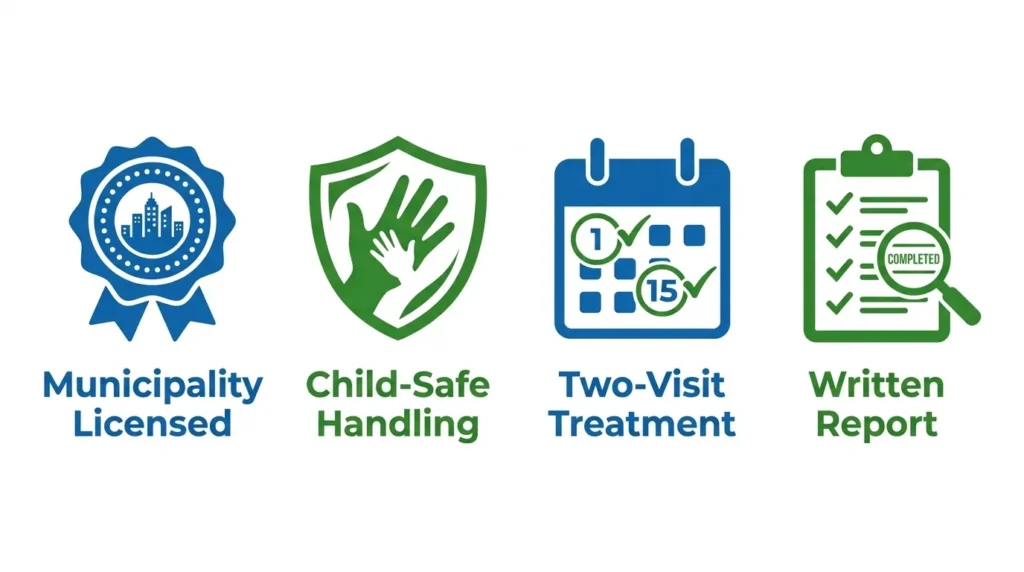
- Only Dubai Municipality-approved companies and chemicals should be used for professional treatment. Any company offering bed bug services should be able to show their Municipality licence and confirm the products they use are on the approved list — don’t just take “safe and effective” on trust.
- Children’s items require extra care. Municipality guidance around pest control treatments is stricter when it comes to children’s toys, bedding, and furniture — these should generally be washed and heat-treated separately rather than directly sprayed, and kept out of the room during and immediately after a professional chemical treatment.
- Two-visit treatment is standard, not optional. If a company offers a “one-time guaranteed” bed bug treatment with no follow-up visit, treat that as a red flag rather than a selling point — legitimate treatment protocols account for the egg hatching cycle.
- Rental apartments add a documentation step. If you’re in a rented apartment, ask your pest control provider for a written treatment report — useful both for your own records and if the issue needs to be raised with a landlord or building management.
Frequently Asked Questions
What kills bed bugs instantly?
Direct contact with a pyrethroid-based spray kills bed bugs on the spot, and heat above a certain threshold kills both bugs and eggs almost immediately. Nothing kills an entire hidden infestation “instantly” — eggs and bugs tucked into cracks and seams require a combined, multi-step treatment.
Does bed bug powder actually work?
Yes, but slowly. Powder works by drying out the bug’s outer shell over several days rather than poisoning it on contact, which makes it useful for ongoing protection in cracks and voids rather than an instant kill.
Can bed bugs live in carpet?
Yes, though it’s less common than mattresses or sofas. They typically shelter along the edges where carpet meets the wall or skirting board in a heavily infested room.
How many treatments are needed to get rid of bed bugs?
Most professional treatments in Dubai involve at least two visits, roughly two to three weeks apart, since bed bug eggs can survive the first treatment and need to be caught after they hatch.
Where can I buy bed bug spray and powder in the UAE?
Bed bug sprays and powders are widely available at Lulu, Carrefour, Union Coop, ACE, and on Amazon.ae, with local brands like Habro Goodbye and Katmel sold alongside international brands like Raid and Hot Shot.
Is DIY bed bug treatment enough, or do I need a professional?
For a small, early-stage infestation limited to one mattress or piece of furniture, a thorough DIY process using spray, powder, washing, and encasement can work. For a spreading infestation across multiple rooms or furniture pieces, a Dubai Municipality-approved professional with heat treatment access gets the job done faster and more reliably.
Final Thoughts
Bed bug spray has a real, specific job: killing bugs you can directly reach. It was never designed to solve an infestation that’s spread into mattress seams, bed frames, and wall voids on its own — that’s where powder, heat, and professional treatment each play a different role. If you’re still finding bites or live bugs after a thorough DIY attempt, that’s the moment to bring in a bed bug treatment in Dubai specialist rather than reaching for another can of spray.