
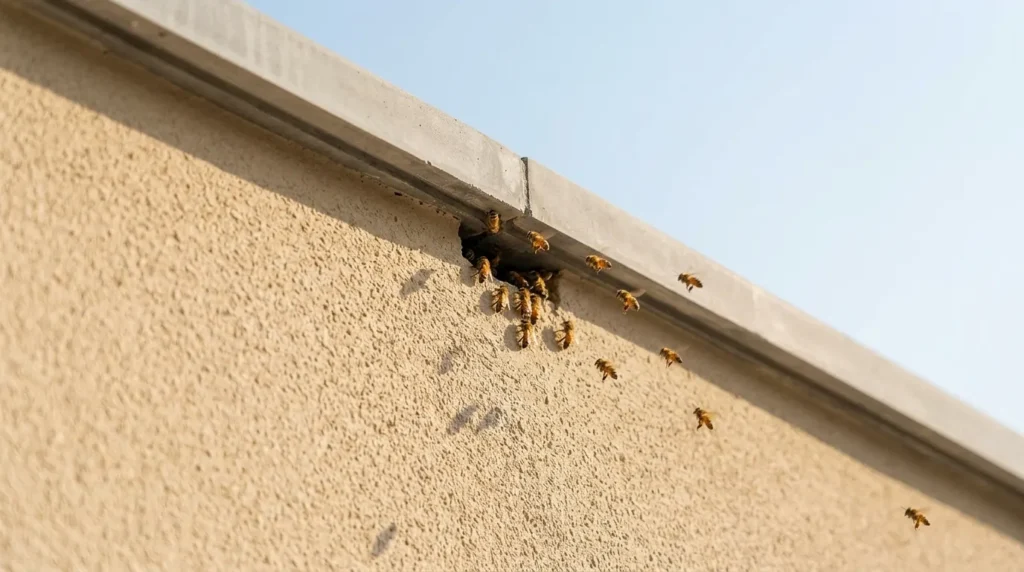
It starts with a few bees by the wall. Then a few more. By the weekend there is a steady line of insects going in and out of a tiny gap near your roof, and you are wondering whether it is a harmless honey bee hive or something that will sting.
The answer matters, because bees, wasps and hornets are treated very differently. This guide shows you how to identify a honey bee nest or hive from a safe distance, how to tell it from other nests, and what to do next.
Quick answer: how do you identify a honey bee hive?
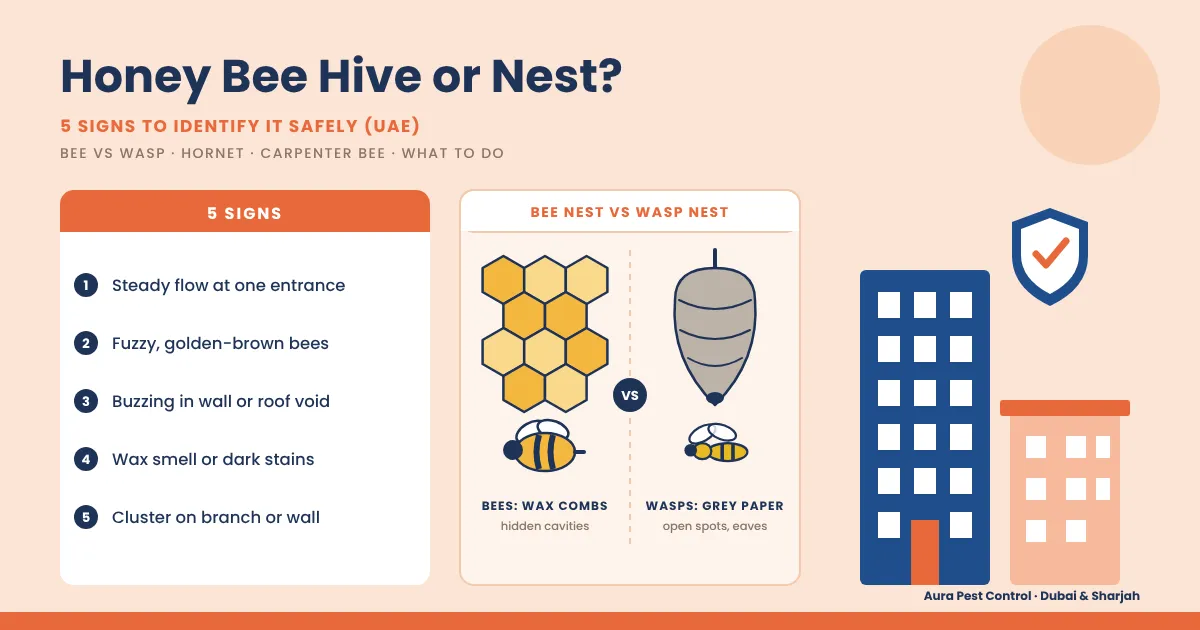
A honey bee hive is made of beeswax, with vertical hexagonal combs hidden inside a cavity such as a wall, ceiling void, tree hollow or AC box. From outside you usually see a steady stream of fuzzy, golden-brown bees using one small entrance. Wasp and hornet nests are made of grey or brown paper-like pulp and are often exposed, for example under eaves or on balconies.
Bee hive vs bee nest: is there a difference?
People use the two words interchangeably. A hive usually means a honey bee colony living in a structure, either a beekeeper box or a natural cavity. A nest is the general word for where bees or wasps raise their young. For your property, what matters is who lives inside, not the word.
5 signs you have a honey bee hive on your property
- A steady flow at one entrance. Bees fly in and out of the same small opening all day.
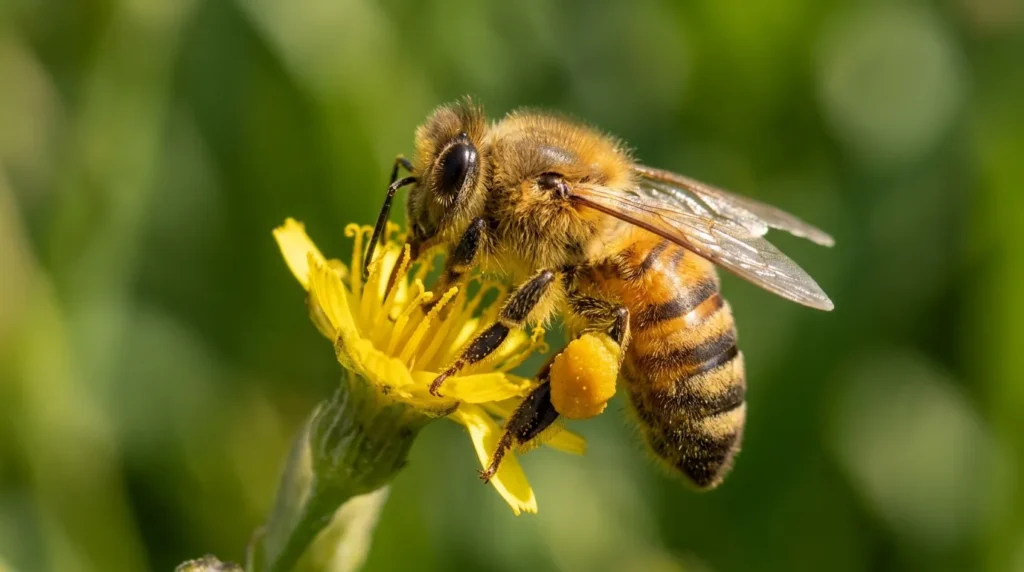
- Fuzzy, golden-brown insects carrying pollen. Honey bees look hairy, and you may see yellow pollen on their legs.
- Buzzing or humming from a wall, ceiling or roof void. The sound grows louder in warm weather.
- Wax smell or dark stains. Honey and wax can seep through plasterboard and leave dark patches.
- A cluster of bees on a branch, rail or wall. This may be a swarm that stopped to rest before moving on, or the start of a new hive.
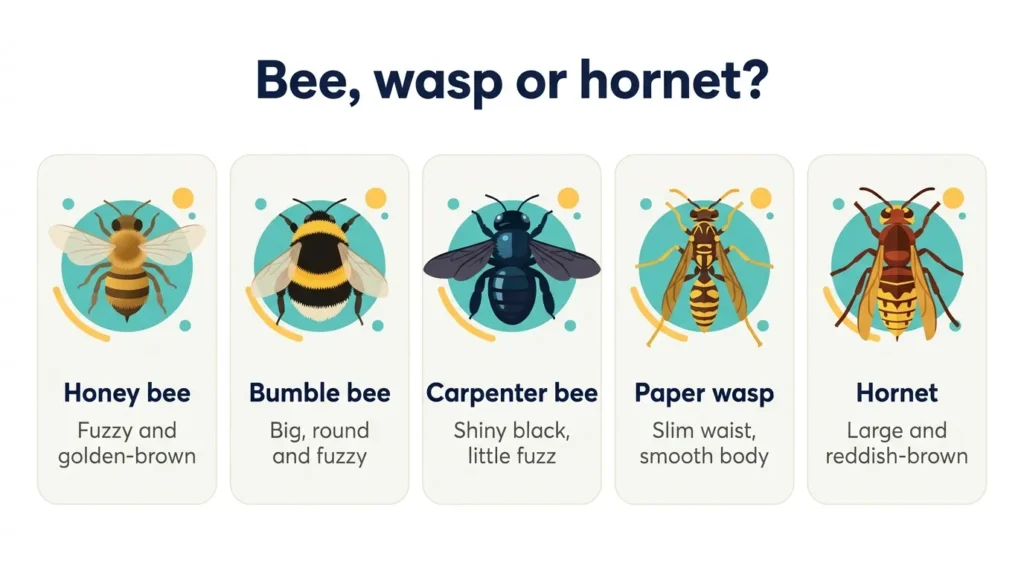
Honey bee vs wasp vs hornet vs other bees: quick identification table
Use this table to compare what you are seeing. Always observe from a distance.
| Insect | Nest material | Where you find it | What it looks like |
|---|---|---|---|
| Honey bee | Beeswax, hexagonal combs | Hidden cavities: walls, roofs, tree hollows, boxes | Fuzzy, golden-brown, rounded body |
| Bumble bee | Wax cells in small clusters | Ground-level hollows, old burrows, thick vegetation | Large, round and very fuzzy, black and yellow |
| Carpenter bee | Tunnels bored into wood | Wooden beams, pergolas, fences, window frames | Large, shiny black or bluish, little fuzz |
| Paper wasp | Grey paper-like pulp, umbrella shape | Open spots: eaves, balconies, shrubs, under ledges | Slim waist, smooth body, long legs |
| Hornet (such as the Oriental hornet) | Papery or earthen nest | Cavities, underground, sheltered corners | Larger, reddish-brown and yellow, strong flyer |
Bee nest vs wasp nest: the key differences
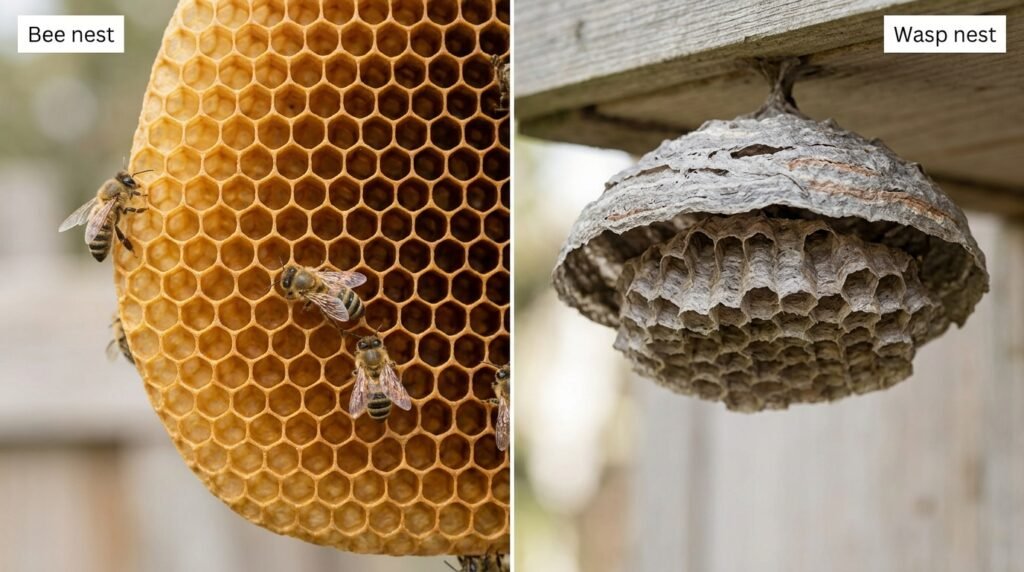
This is the question most people search. Here are the differences that matter:
- Material. Bees build with wax produced by their own bodies. Wasps chew wood fibre into paper-like pulp.
- Shape. Bee combs are neat, parallel sheets of hexagons. Wasp nests are often layered or umbrella-shaped.
- Location. Honey bees prefer enclosed, hidden cavities. Many wasps build in the open.
- Colour. Beeswax is cream or golden. Wasp paper is grey or brown.
- Behaviour. Honey bees are usually calm unless the hive is disturbed. Wasps and hornets are more defensive around their nests.
- Stinging. A honey bee generally stings once. Wasps and hornets can sting repeatedly.
How to identify the nest safely, step by step
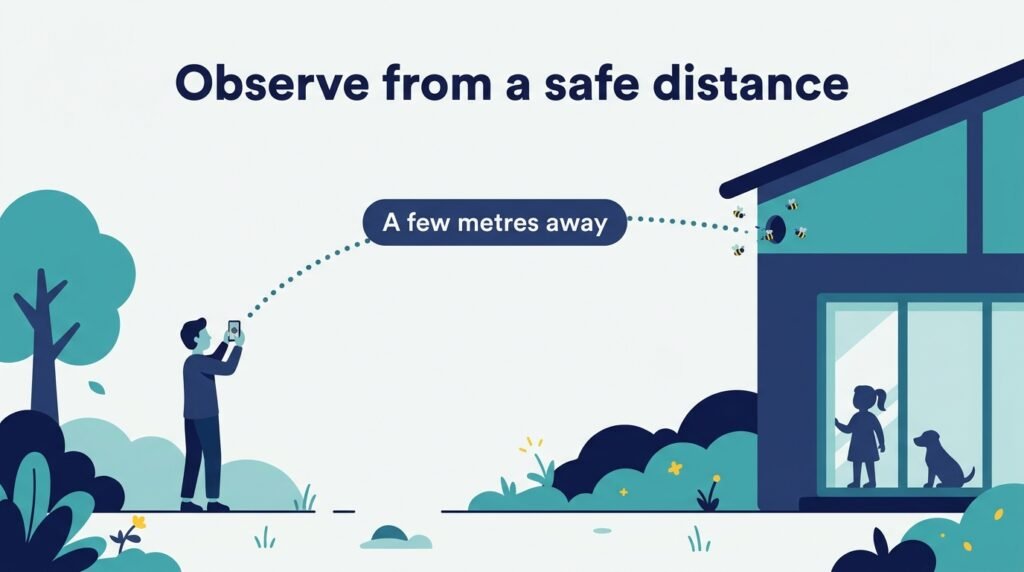
You can learn a lot without going near the nest. Follow these steps:
- Stay at least a few metres away. Keep children and pets indoors.
- Watch the entrance for ten minutes from a distance. Note how busy it is and what the insects look like.
- Take photos or a short video with zoom. Do not use flash close to the nest.
- Note the location: height, surface, direction and whether it is near a door, pool or play area.
- Look for wax or honey stains, round holes in wood, or paper-like material.
- Send the photos to a licensed pest control company for identification.
Honey bee hive vs swarm: what is the difference?
A swarm is a temporary ball of bees resting while scouts look for a new home. It often moves on within hours or a few days. A hive has combs, stored honey and brood, and stays. If a cluster stays for more than a day or two, or you see bees entering a gap in your building, treat it as a hive.
Bees and wasps you may see in the UAE
Honey bees are present in the UAE, and so are carpenter bees, paper wasps and the Oriental hornet. Honey bee colonies are valued as pollinators. Gulf News reported that Expo 2020 Dubai worked with the Beekeepers Association to safely remove and relocate a swarm from its site rather than destroy it. That is the approach to ask for if the bees are safe to move.
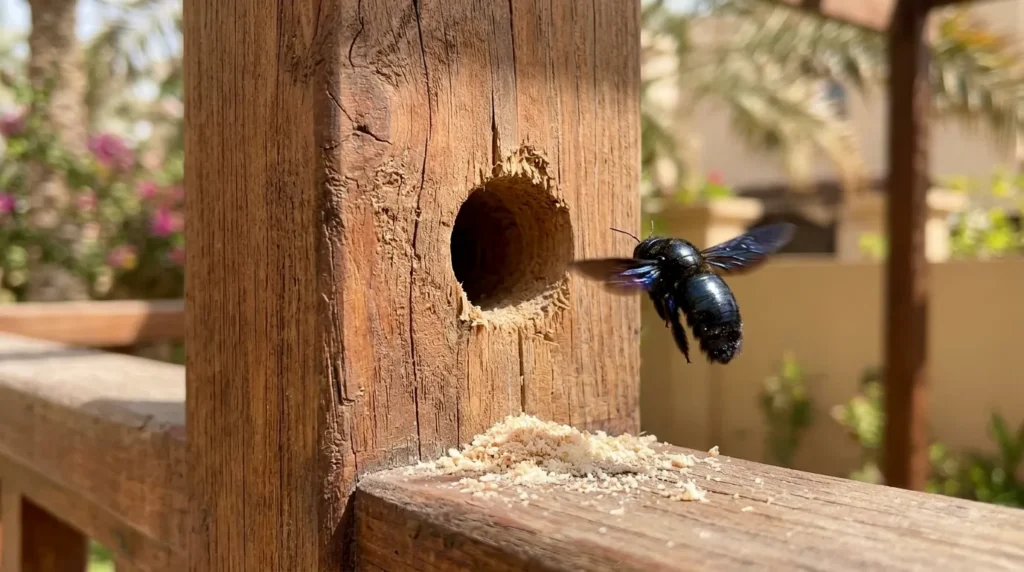
Carpenter bees leave neat, round holes in wood with fine sawdust below. Bumble bee nests are usually at ground level and are less common around apartments.
Is a bee hive dangerous?
A hive that is left alone is usually calm, but it becomes risky if people, pets or lawn equipment get close. The main dangers are:
- Multiple stings if the hive is disturbed.
- Allergic reactions. If someone has swelling of the face or throat, trouble breathing, dizziness or widespread hives after a sting, call 998 immediately.
- Damage. Melted wax and honey can seep into walls and ceilings and attract other pests.
- Children and pets who walk too close.
What to do if you find a bee nest or hive
- Keep away and keep everyone else away.
- Do not spray, smoke, block the entrance or knock the nest down.
- Do not pour water or chemicals into a wall cavity.
- Take photos from a safe distance.
- Call a licensed pest control company and tell them the location, height and what you have seen.
- Ask whether live relocation is possible for honey bees.
- After removal, make sure wax and honey are cleaned and the entry hole is sealed.
Our bee and wasp control service starts with an inspection to identify what you have and what is safest. Make sure any company you hire is approved, using our guide on how to check a Dubai Municipality approved company.
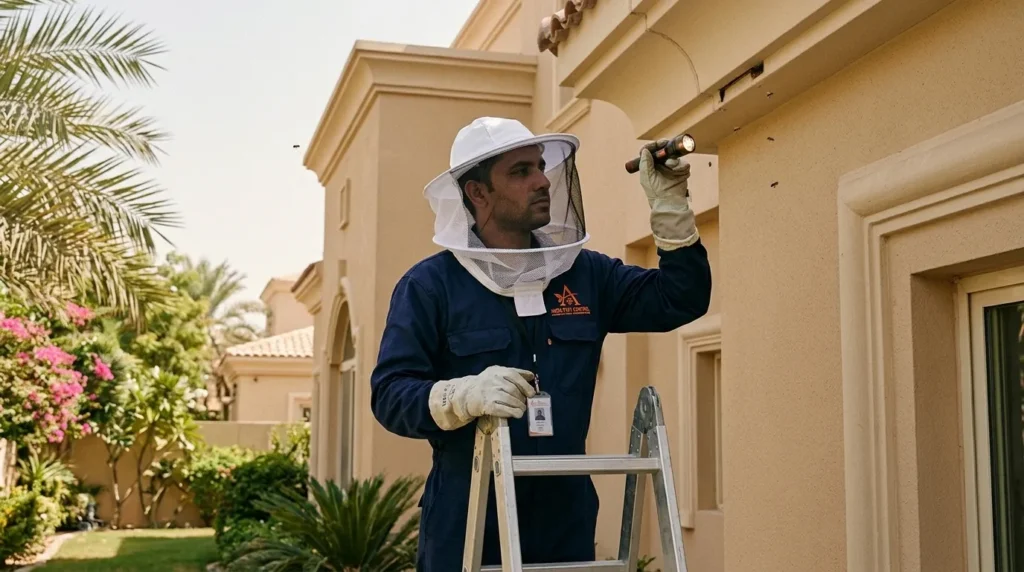
Why you should not remove a hive yourself
- You can be stung many times, and some stings can cause severe allergic reactions.
- Killing the bees without removing the comb leaves wax and honey that rot, leak and attract ants, flies and rodents.
- Sealing the entrance traps bees inside, and they may chew into your living space.
- Leftover scent can attract the next swarm to the same spot.
How to stop bees from coming back
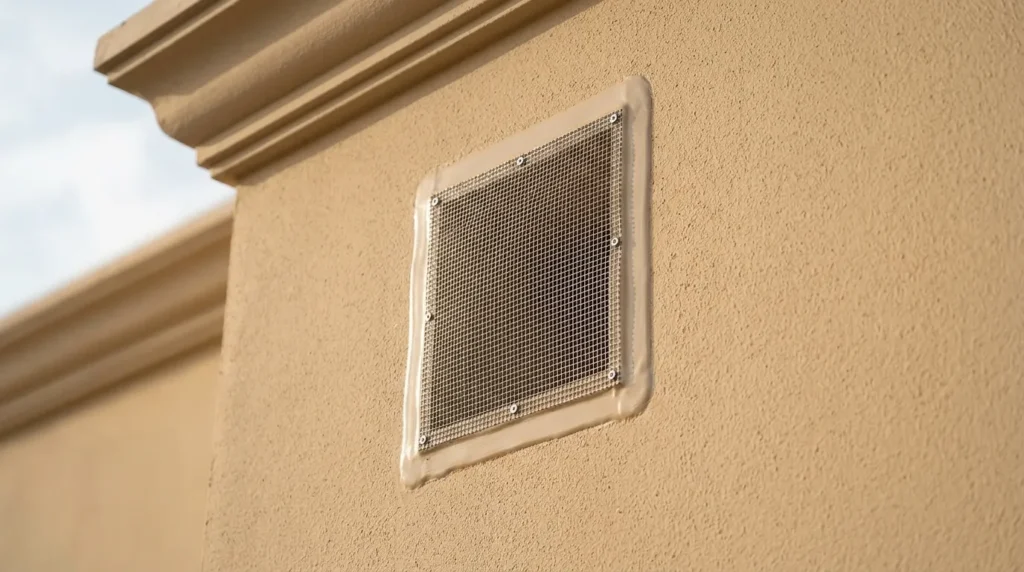
- Seal holes, gaps and wall cavities after the hive is removed.
- Clean the area where wax and honey were present.
- Cover unused AC boxes, meter boxes and shafts with mesh.
- Paint or treat exposed wood to discourage carpenter bees.
- Schedule a follow-up inspection. Our pest control contracts cover regular checks for homes and buildings.
For shops, restaurants and offices, see our commercial pest control page.
Need help identifying a bee nest on your property?
Send us photos on WhatsApp at +971 52 408 0230, with your area and where the insects are. We will help you identify them and arrange an inspection across Dubai and Sharjah. See pest control in Dubai or contact us.
Frequently asked questions
How do I know if it is a honey bee nest?
Look for a hidden entrance, fuzzy golden-brown bees, wax combs and steady traffic. If the nest is grey, papery and exposed, it is probably wasps.
What is the difference between a bee nest and a wasp nest?
Bees build with beeswax in parallel hexagonal combs, usually in hidden cavities. Wasps build with paper-like pulp, often in open spots.
Is a bumble bee nest dangerous?
Bumble bees are generally calm. Their nests are small and usually at ground level, but they will defend the nest if disturbed.
Where do carpenter bees nest?
In wood: beams, pergolas, fences and frames. You will see round holes and sawdust.
Do honey bee hives need to be removed?
If the hive is close to people, children or pets, or inside a wall, yes. Ask for live relocation where it is safe.
Can I spray a bee nest?
No. Spraying can make the bees defensive and leaves honey and wax behind. Call a licensed professional.
How long does a swarm stay?
Often hours to a few days. If it stays longer or enters a gap in the building, it is likely becoming a hive.
What should I do if someone is stung and feels unwell?
Call 998 for an ambulance if there is difficulty breathing, face or throat swelling, dizziness or widespread rash.
Final thoughts
Identifying a honey bee nest comes down to material, location and behaviour: wax versus paper, hidden versus open, calm versus defensive. Observe from a distance, take photos and let a licensed team handle the removal. That keeps your family safe and gives honey bees a chance to be relocated.
Related reading: how to get rid of pests in Dubai and pet-friendly pest control in Dubai.