
Commercial pest control in Dubai means a licensed company inspects your premises on a schedule, treats and proofs entry points, and gives you written service reports for every visit. Restaurants, hotels, offices and warehouses usually need a contract so the records are ready for inspectors, auditors and landlords.
This guide is written for business owners, facility managers and restaurant operators. It covers what the rules expect, what each type of property needs, how to deal with rats in restaurants, offices and warehouses, what a good contract contains, and what affects the price.
In this guide: why businesses need a licensed provider, rules in Dubai and Sharjah, restaurants, offices, hotels, warehouses and industrial sites, a contract checklist, cost factors, how Aura works with businesses, and FAQs.
1. Why businesses cannot treat pest control as optional
- Compliance. Food businesses are inspected by authorities, and pest control records are part of what inspectors ask to see.
- Reputation. One cockroach seen by a guest or a rodent photographed by a customer spreads faster than any treatment bill.
- Stock and product loss. Rodents and stored-product insects contaminate food and packaging, and what they touch usually has to be thrown away.
- Damage and fire risk. Rodents gnaw cables, insulation and packaging, which can cause outages and electrical faults.
- Landlord and building rules. Many property managers expect tenants to hold a contract with an approved company.
- Staff health and morale. Staff stop working in areas where they see pests.
2. What the rules expect in Dubai and Sharjah
Commercial pest control is tied to your own operating licence, not only to your hygiene standards.
👉 Swipe left and right to see the full table
| Dubai | Sharjah | |
|---|---|---|
| Regulator | Dubai Municipality (Public Health Pest Control Section, Food Safety Department for food premises) | Sharjah Municipality (Public Health and Food Control sections) |
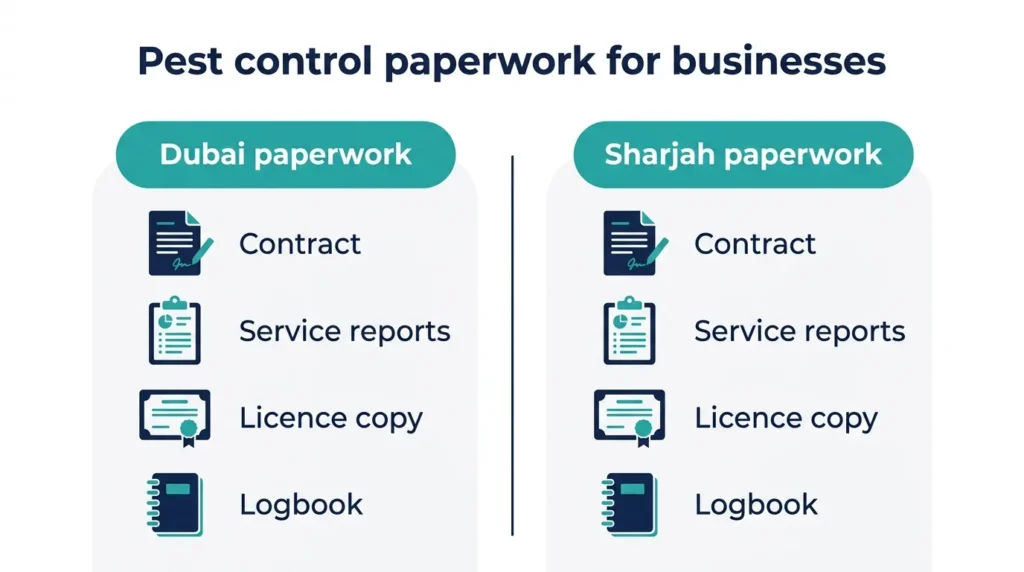
| Food businesses | Expected to keep an active contract with a Municipality-approved pest control company and a pest control logbook on site for inspectors | The Municipality asks for a pest control contract approved by it, as part of food premises requirements |
| Paperwork examples | Copy of the company licence, service reports, product list, logbook entries | Contract stamped by both the pest control company and the customer, a record of visits with both stamps, and trade licences of both parties |
| Who may apply pesticides | Licensed, qualified technicians only. Food premises should not apply pesticides themselves | Companies holding the Municipality permit for public health pest control |
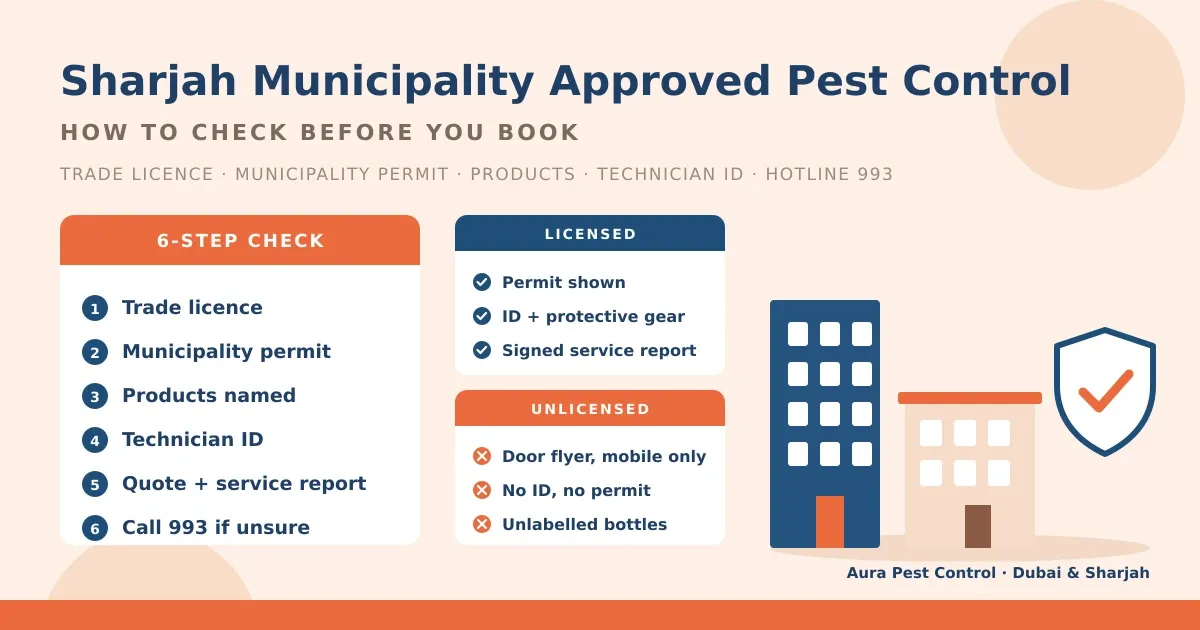
The practical message is simple: choose a company that is genuinely approved in the emirate where your premises are. Our guides explain how to verify a company in Dubai and in Sharjah.
3. Pest control for restaurants and food businesses
Kitchens give pests food, water, warmth and shelter in one place. The main problems are cockroaches, flies, rodents and stored-product insects in dry stores.
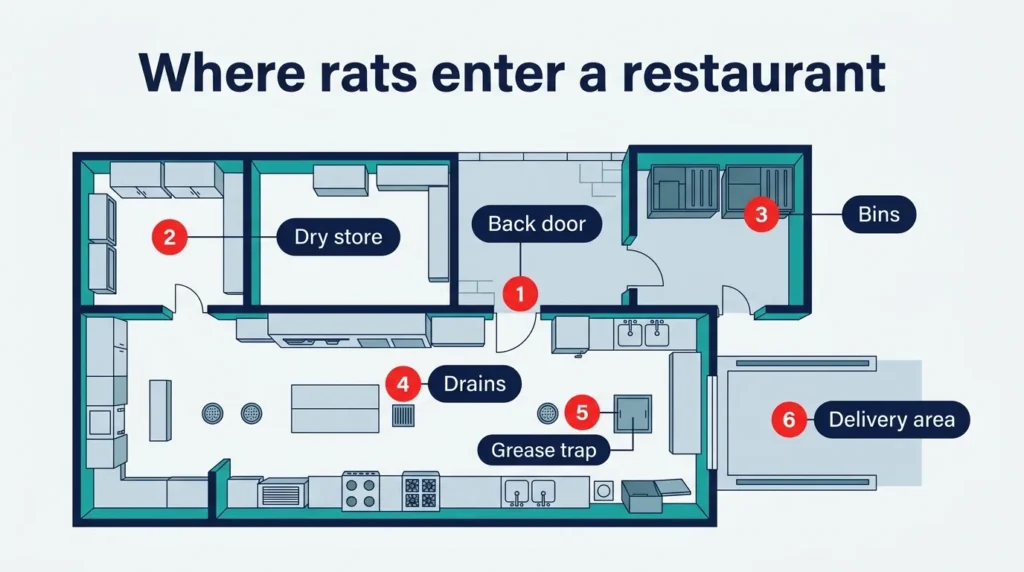
Rats in a restaurant: signs and first steps
- Signs: droppings near dry stores, bins and back doors; gnaw marks on packaging; greasy rub marks along walls; scratching at night; a stale smell.
- Likely entry points: gaps under back doors, around pipes and drains, damaged door seals, delivery areas and open roof voids.
- What attracts them: food waste left in open bins, spilled dry goods, blocked grease traps, cardboard storage and standing water.
How to get rid of rats in a restaurant
- Call a licensed company for an inspection. Do not put out your own poison in a food area. It can contaminate food and surfaces, and food premises are generally not allowed to apply pesticides themselves.
- Find the entry points and close them: door sweeps, sealed pipe gaps, mesh over vents, repaired drain covers.
- Remove food and shelter: covered bins emptied daily, dry goods in sealed containers raised off the floor, and no cardboard stacked against walls.
- Use bait stations and traps placed by the technician, with locations recorded in a site map so every check is logged.
- Monitor and review. A good provider reviews trends each visit and tells you which areas keep attracting activity.
Cockroaches and flies in kitchens
Cockroaches hide in drains, behind equipment and in wall cavities, and are mostly active at night. Flies follow waste and open food. Targeted gel baits and treatment of harbourage points are safer around food than broad spraying, and fly control starts with bin and waste management. See our cockroach control and mosquito and flies control pages.
4. Pest control for offices
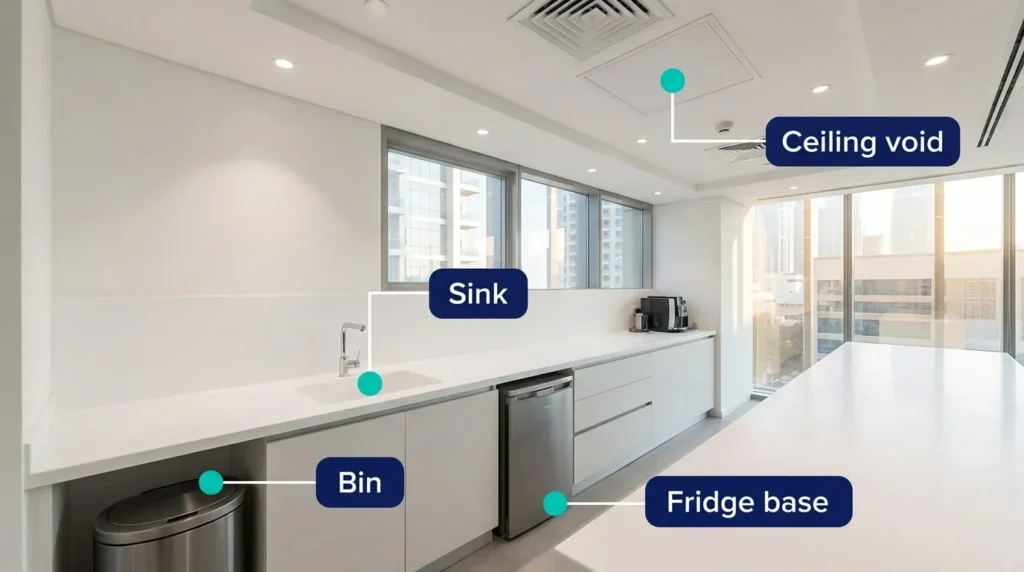
Offices do not look like pest targets, but pantries, bins and shared buildings give pests what they need. Searches such as “office pest control Dubai” usually come from a few common problems:
- Pantry pests: cockroaches, ants and flies around coffee stations, fridges and bins.
- Rats in the office: noises in the ceiling, droppings in storage rooms, chewed cables. Rodents often arrive from shared service ducts or adjoining units.
- Shared building problems: one tenant’s food waste can feed pests that spread to every floor.
Work with the building. Tell building management, because a treatment in your unit works much better if the common areas are included. Ask for after-hours visits so staff are not disturbed, and clear desks and the pantry before the visit. We serve offices in business districts across Dubai, including Dubai Sports City, Business Bay, JLT and DIFC; see our pest control in Dubai page for the full list.
5. Pest control for hotels and serviced apartments
Hotels face two risks at once: pests in guest rooms and pests in kitchens and back-of-house areas.
- Guest rooms: bed bugs and cockroaches. A single guest complaint can lead to a refund and a public review, so response time matters.
- Back-of-house: food stores, laundry, waste rooms and staff areas, where rodents and cockroaches build up unseen.
- Outdoor areas: pools, gardens and landscaping that attract mosquitoes, ants and flies.
A good hotel programme includes room-turnover checks, a fast call-out process, written reports per floor or zone, and a clear plan for isolating an affected room. For bed bug problems see bed bug control.
6. Pest control for warehouses and industrial sites
Warehouses have large spaces, constant deliveries and stored goods, which suits rodents and stored-product pests. People searching for “rodent control in warehouses” or the cost of it usually want to know how a big space is controlled.
Rodent control in warehouses
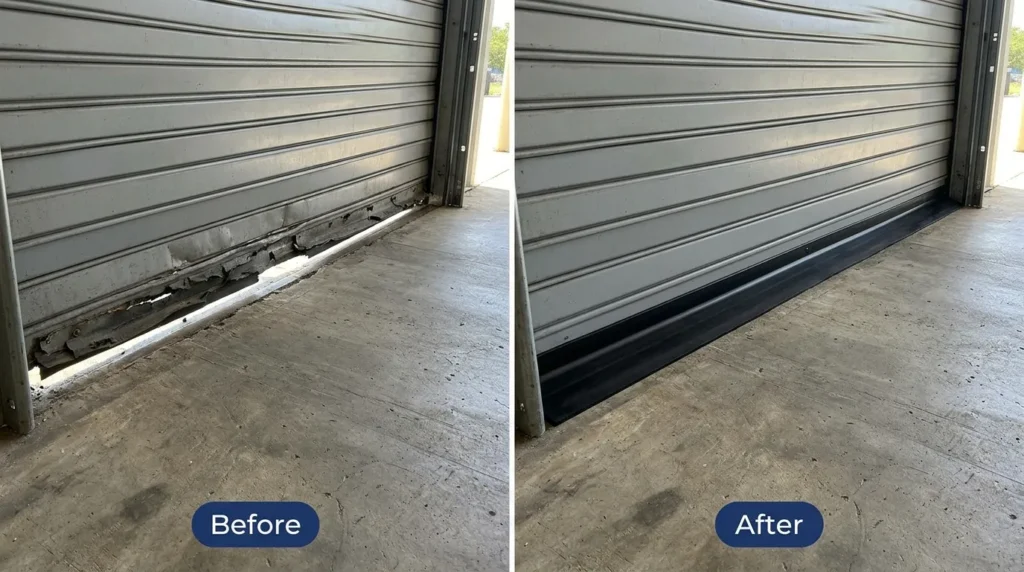
- Dock doors and roller shutters: worn seals and gaps at the base are the main entry. Fit brush or rubber seals and keep doors closed when not in use.
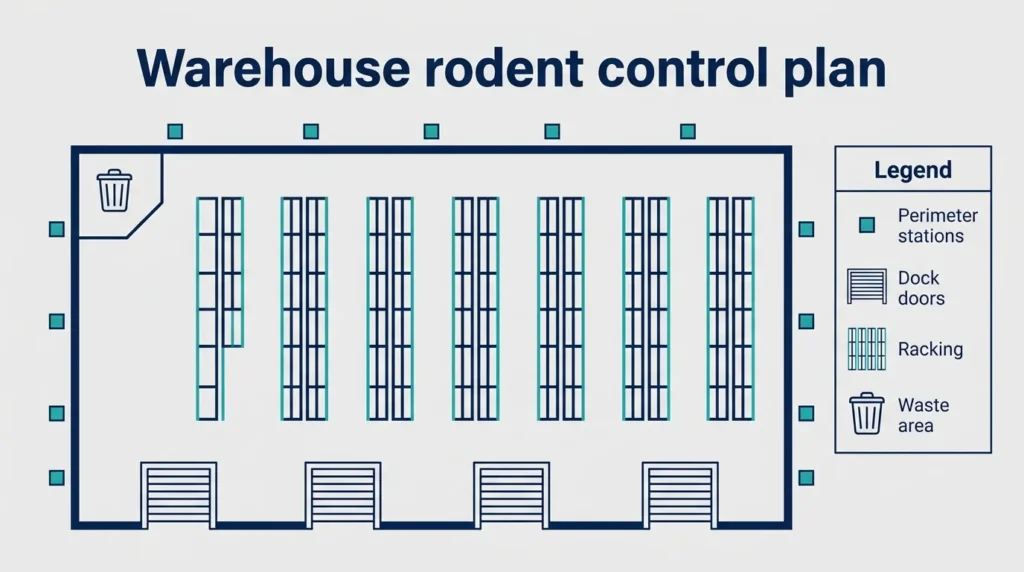
- Perimeter bait stations: tamper-resistant stations placed outside along walls and fences, with each location numbered on a site map.
- Internal monitoring: traps and monitoring points along walls, behind racking and near food or packaging stock.
- Housekeeping: pallets raised off the floor with a gap from the wall, no stacked cardboard against walls, and waste areas kept away from the building.
- Rodent proofing: sealing gaps around pipes, cable entries, vents and drains. Mice can pass through gaps of about 6 mm and rats through gaps of about 12 mm.
Stored-product pests
Weevils, flour beetles and moths live in grain, flour, pet food, spices and dry goods. Rotate stock first-in-first-out, inspect incoming deliveries, and clean spilled product from racking. Treatments should be matched to the pest and the product, so ask your provider what is used near stored food.
What affects the cost of rodent control in a warehouse
There is no fixed price because sites differ so much. These factors set the quote:
- Floor area and building perimeter, which decide the number of stations.
- Level of activity found in the first inspection.
- Type of goods stored, especially food and packaging.
- Number of visits per month and any out-of-hours access.
- Rodent proofing works and repairs, if you want the provider to do them.
- Reporting, such as site maps, trend reports and audit support.
This is the same for Sharjah industrial areas and free zones. If your site is inside a free zone, ask the free zone authority and your pest control company what approvals apply on site.
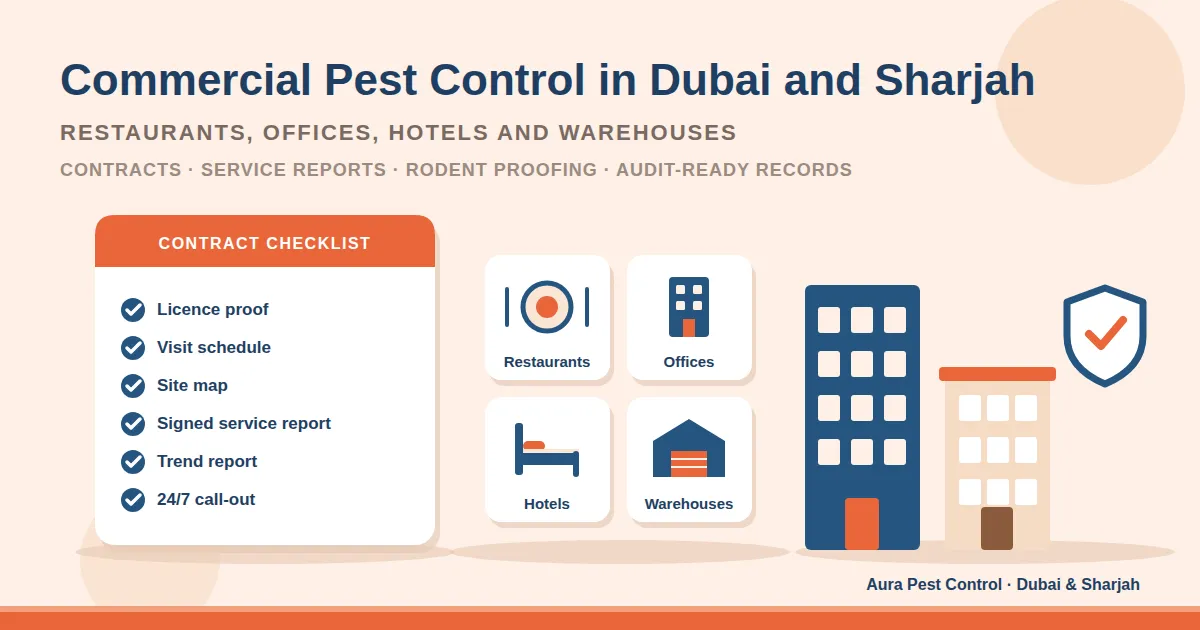
7. What a good commercial pest control contract includes
👉 Swipe left and right to see the full table
| Item | What to look for |
|---|---|
| Licence proof | Copy of the company licence and approval for the emirate where your site is |
| Visit schedule | Number of visits per month or quarter, written in the contract |
| Site map | A plan showing stations, traps and treated areas |
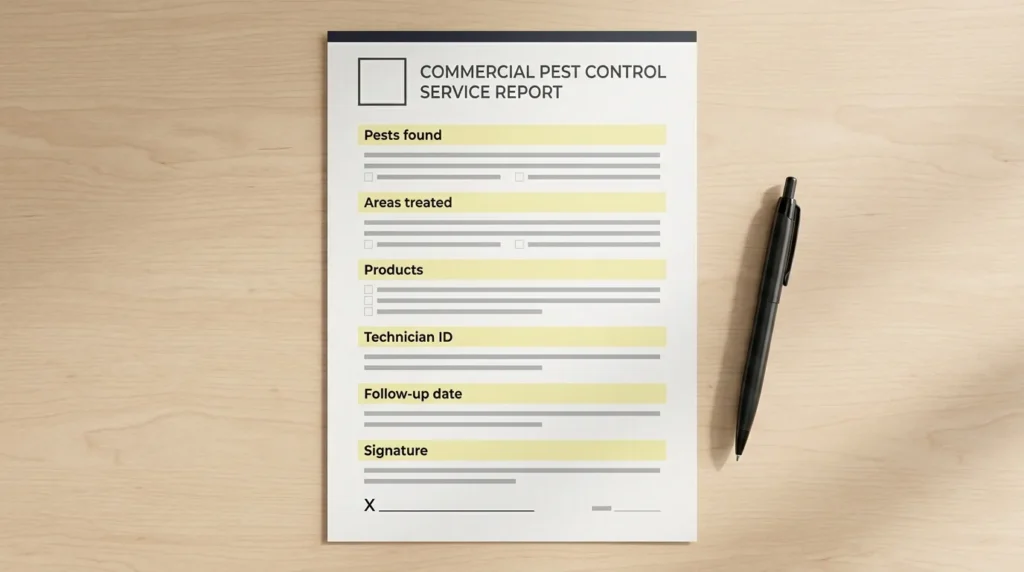
| Service report | Signed after every visit with pests found, areas treated, products, technician ID and follow-up date |
| Product list | Names and active ingredients, plus safety information for food areas |
| Call-out response time | A stated time for urgent problems, and a 24/7 contact |
| Trend report | Monthly or quarterly summary showing which areas have activity |
| Proofing advice | Written recommendations for your team or landlord, for example door seals and drain covers |
| Audit support | Records ready for municipality inspectors, auditors and landlords |
| Warranty and exit terms | What happens if pests return, and the notice period to end the contract |
Our annual maintenance contracts include monthly or quarterly visits and a yearly pest control report. See pest control contracts.
8. How Aura Pest Control works with businesses
👉 Swipe left and right to see the full table
| Step | What happens |
|---|---|
| Site survey | Technician inspects entry points, food and water sources, moisture and existing pest activity |
| Risk rating | We confirm the pests and rate severity from low to critical |
| Custom plan | Built around your property type: restaurant, office, warehouse or building |
| Targeted treatment | Treatment of problem areas with approved methods for commercial use |
| Follow-up | Re-checks after 3 days and again after 2 weeks to confirm activity has dropped |
| Ongoing cover | AMC with monthly or quarterly visits and a yearly report |
We work across Dubai and Sharjah with same-day appointments and 24/7 emergency support. Ask us for licence details and technician ID before you sign. See pest control in Dubai and pest control in Sharjah.
9. Frequently asked questions
Do restaurants in Dubai need a pest control contract?
Food premises are expected to hold a contract with a Municipality-approved pest control company and to keep records for inspectors. Confirm the exact current requirement with Dubai Municipality on 800900.
How often should a restaurant have pest control?
Most food businesses are on a monthly schedule or more often, depending on the risk and the level of activity found. Your contract should state the visit frequency.
What should I do when I see a rat in my restaurant?
Call a licensed company straight away. Keep food covered, do not use your own poison, and write down where and when you saw it so the technician can start at the right place.
How do I get rid of rats in an office?
Report it to building management and call a licensed provider. They will find the entry point, place monitoring and bait where it is safe, and advise on sealing gaps and removing food sources such as open pantry waste.
How do you control rats in a warehouse?
The standard approach combines perimeter bait stations, internal monitoring, rodent proofing at doors and gaps, and strict housekeeping, all recorded on a site map and in visit reports.
How much does rodent control in a warehouse cost in Sharjah?
It depends on the floor area, activity level, stored goods and how many visits you need. A provider should inspect first and give a written quote that lists visits, reports and any proofing work.
Do you offer after-hours service for offices and hotels?
Yes, we can plan visits outside working hours so staff and guests are not disturbed. Tell us your preferred timing when you book.
What records will I get after each visit?
A signed service report that shows what was found, where we treated, which products were used, the technician’s name and ID, and when the next visit is due.
Is commercial pest control different from home pest control?
Yes. Businesses need scheduled visits, documentation, and plans for large or shared spaces, while homes usually need targeted treatment and follow-up. Read our guide to home pest control in Dubai for the household version.
Request a commercial inspection and quote
Tell us the type of premises, the pests you have seen and your visit preferences. Aura Pest Control will arrange a site survey and send a written quote.
- WhatsApp: +971 52 408 0230
- Call: +971 52 408 0230
- Email: info@aurapestcontrol.ae
- Contact us | Pest control contracts