
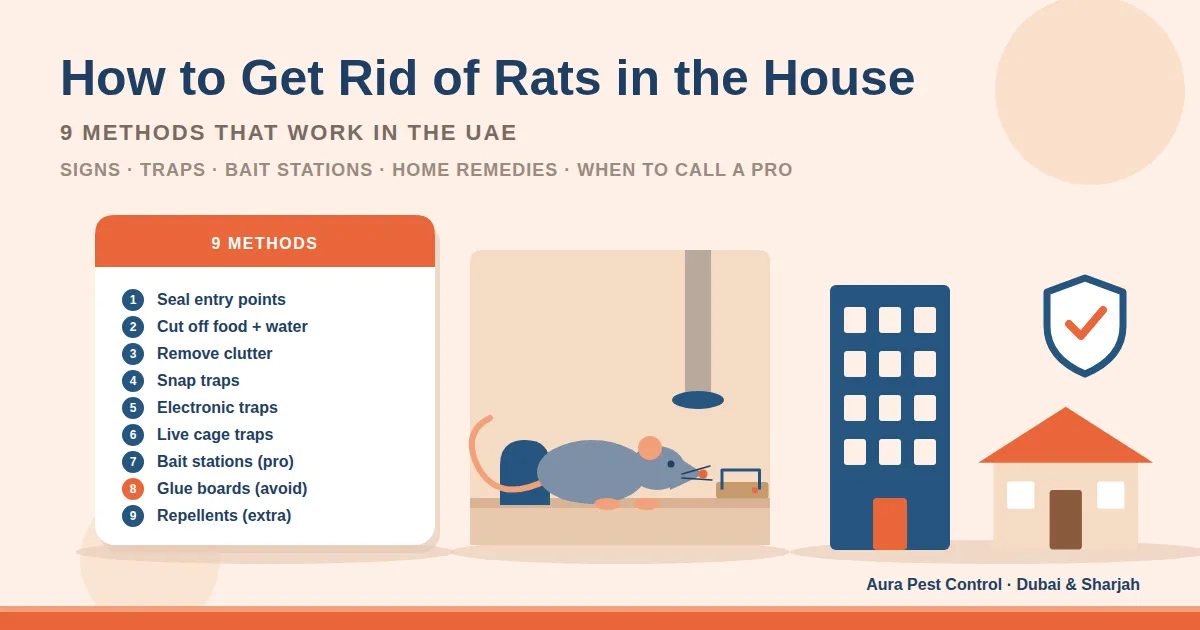
To get rid of rats in the house, find where they enter and seal those gaps, remove food, water and nesting spots, then trap or bait the rats that are already inside. The nine methods below are sealing, food control, clutter removal, snap traps, electronic traps, live traps, bait stations, glue boards and repellents. A professional is the best option for large infestations.
- Seal entry points. The most important step, and the only one that prevents a return.
- Cut off food and water. Rats stay where they can eat and drink.
- Remove clutter and nesting sites. Fewer hiding places means fewer rats.
- Snap traps. Cheap and effective when placed correctly.
- Electronic traps. Fast and tidy, but expensive.
- Live cage traps. Humane in theory, awkward in practice.
- Tamper-resistant bait stations. Powerful, but best handled by professionals.
- Glue boards. Not recommended.
- Repellents. Limited results.
Rats breed quickly, so act as soon as you see a sign. In the UAE this applies to apartments, villas, restaurants and warehouses alike.
1. Confirm the problem: signs and where rats hide
Before you act, confirm that you have rats, and not mice or another pest. Our detailed guide to the signs of rats in your house covers each sign in more depth.
| Sign | What to look for |
|---|---|
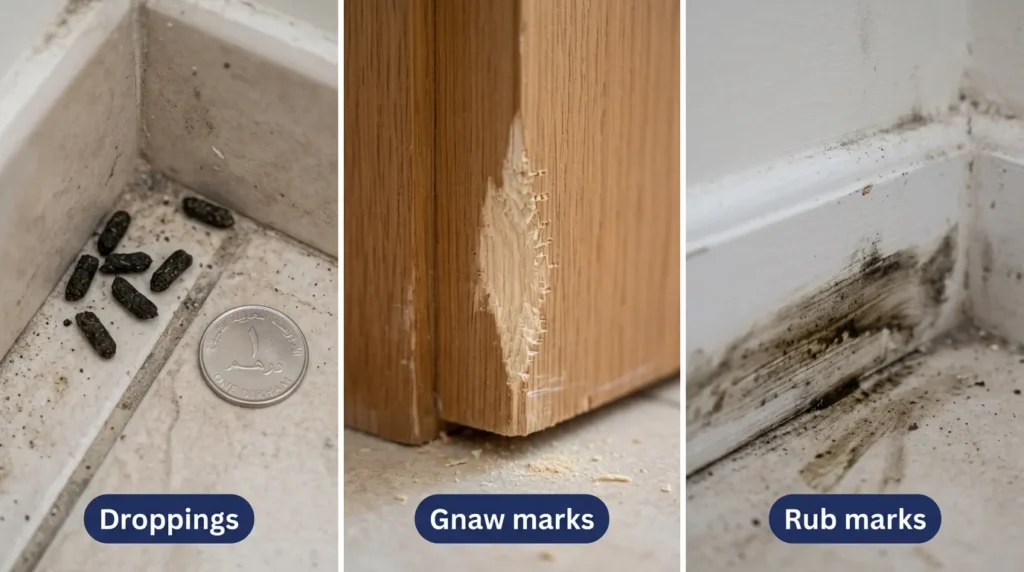
| Droppings | Dark, capsule-shaped pellets, larger than mouse droppings, usually along walls, behind appliances and in cupboards. Fresh ones are dark and soft, old ones are grey and dry. |
| Gnaw marks | Chewed wood, cables, plastic, food packaging and pipes. Rats gnaw constantly to keep their teeth short. |
| Noises | Scratching, scurrying or squeaking at night in ceilings, walls and false ceilings. |
| Smell | A musky, ammonia-like odour in closed spaces. |
| Grease and rub marks | Dark smears along skirting boards and around gaps where rats travel the same route. |
| Nesting material | Shredded paper, fabric or insulation in quiet places. |
| Damaged food | Bitten packets, chewed fruit and spilled grains in the kitchen or store. |
| Sightings | A rat in the daytime often means a larger population, because rats prefer to move at night. |
Roof rat or Norway rat?
Two species cause most problems. The roof rat (also called the black rat) is slim with a long tail, climbs well and nests high up, for example in false ceilings, roof spaces, palm trees and cable trays. The Norway rat (brown rat) is heavier, burrows and prefers ground level, drains, basements and gardens. Knowing which one you have tells you where to place traps and where to look for entry.
Where rats hide in UAE homes
- False ceilings, roof voids and behind AC ducts and cable trays.
- Behind and under kitchen units, cookers and fridges.
- Store rooms, garages and maid’s rooms with cardboard and stored items.
- Gardens, palm trees, hedges and outdoor storage near villa walls.
- Bin rooms, drains and service shafts in apartment buildings.
Rats are often more noticeable in cooler months, when they move indoors looking for warmth and food, but they can be a problem all year.
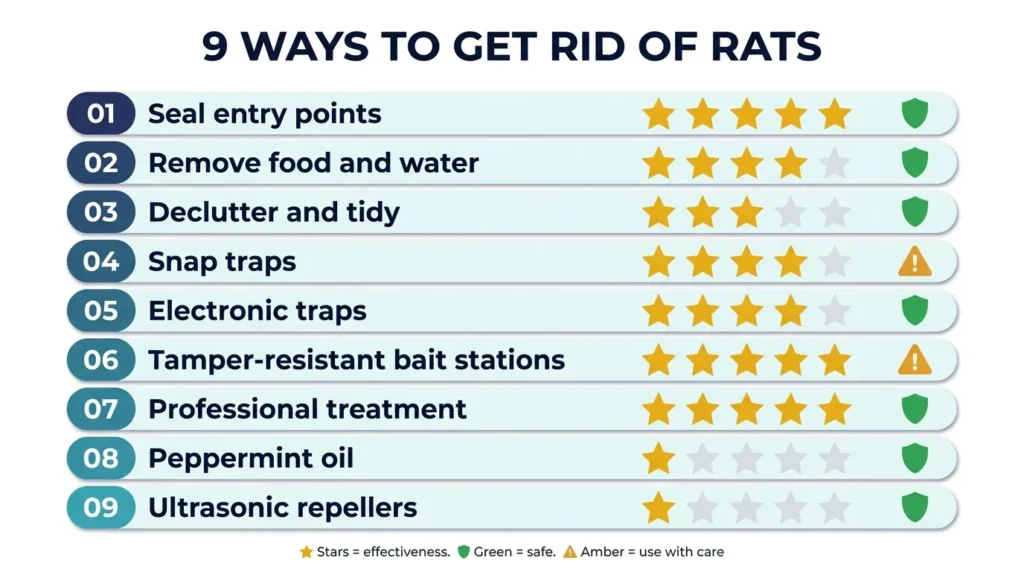
2. Methods 1 to 9: seal, clean, traps, bait stations, repellents and more (honest pros and cons)
Method 1: Seal entry points
Rats can squeeze through gaps of about 2 cm, and roof rats climb pipes, cables and trees to reach the roof. Walk around the outside and inside of your home and check gaps around pipes, AC lines, cable entries, vents, door bottoms, window frames, roof edges and drain covers. Fill small gaps with steel wool plus sealant or cement, and cover vents with metal mesh. Rats gnaw through plastic and foam, so use metal or cement for important gaps.
Pros: the only method that stops rats coming back. Cons: takes time, and you need to seal after the rats are out, not while they are inside. See our full guide to rat proofing your home.
Method 2: Cut off food and water
Store dry food, grains and pet food in thick plastic or metal containers. Keep bins closed, take rubbish out daily, clean crumbs and grease, and fix dripping taps and leaking pipes. In villas, pick up fallen fruit and do not leave pet food outside overnight.
Pros: cheap and helps every other method work. Cons: rats will still find enough to survive in a building with shared bins and food outlets.
Method 3: Remove clutter and nesting sites
Clear stored boxes, old furniture and piles of paper and fabric from stores, garages and balconies. Move items away from walls so you can inspect, and replace cardboard with plastic bins. Trim palm fronds and branches that touch the roof.
Pros: removes shelter and makes traps more effective. Cons: does not remove rats on its own.
Method 4: Snap traps
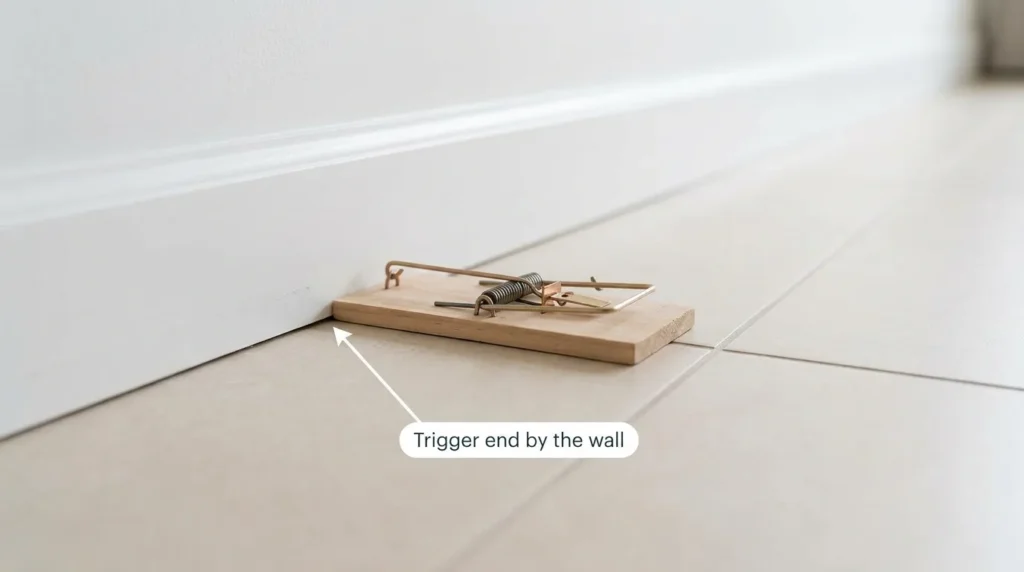
Snap traps kill quickly when set correctly, and they are the most practical DIY option for a small problem. Place them along walls, at the paths where you found droppings, with the trigger end next to the wall. Rats avoid new objects, so put unset, baited traps out for a few days first, then set them. Use a small amount of bait (peanut butter, nuts or dry fruit) and check traps every day. Wear gloves when handling traps and dead rats. See our guide to how to trap a rat in the house.
Pros: cheap, no poison, quick. Cons: only catches a few rats at a time, can be set off by pets or children, and needs daily checks.
Method 5: Electronic traps
These battery-powered traps kill a rat quickly with an electric shock and are closed, so they are tidy and easier to empty. They suit kitchens and indoor spaces.
Pros: fast, enclosed, reusable. Cons: higher price and needs batteries.
Method 6: Live cage traps
Cage traps catch rats alive. Wear gloves and check them often. Releasing rats near your home just moves the problem, and releasing wild rats is not always allowed, so most people use them only with a plan to dispose of the rat properly.
Pros: no killing, and the trap can be reused. Cons: stressful for the rat, awkward to handle, and rats are cautious about entering cages.
Method 7: Tamper-resistant bait stations
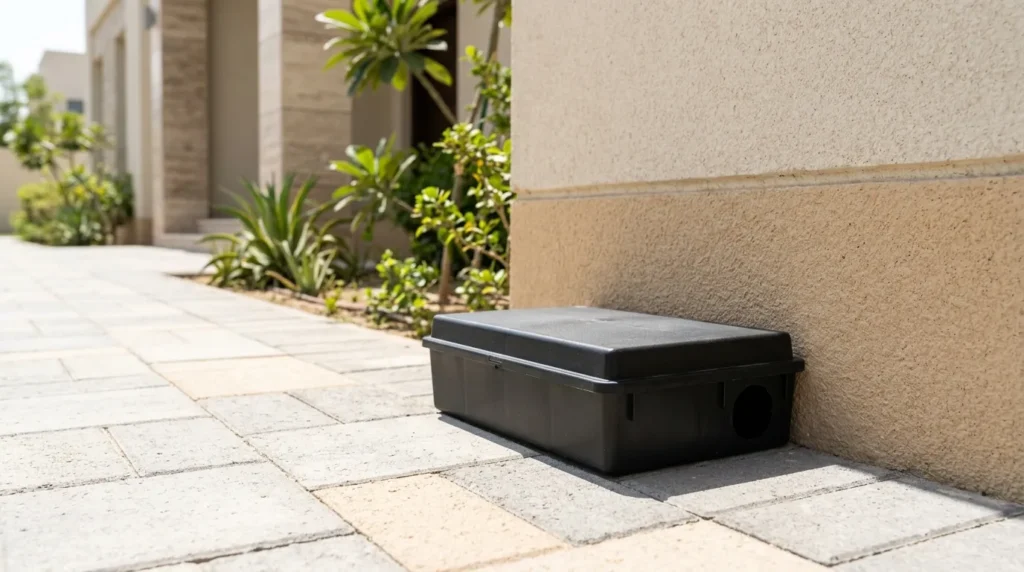
Bait stations are lockable boxes that hold rodenticide so rats can feed while children and pets cannot reach the bait. They can control a whole rat population, but the rats die slowly, usually in hidden places, and poisoned rodents can poison pets and wildlife that eat them. This method needs correct products, placement and monitoring, and we recommend that it is done by a licensed pest control company. Read more in our guide to rat bait boxes and bait stations.
Pros: effective on larger infestations. Cons: risk of secondary poisoning, dead rats in walls or ceilings, and misuse if you use it without training.
Method 8: Glue boards (not recommended)
Glue boards trap rats on a sticky surface. They are cruel, rats often struggle free or die slowly, and they can catch pets, birds and lizards. They are also messy to dispose of. Snap or electronic traps are better. See rat glue traps: do they work and what to use instead.
Pros: cheap. Cons: inhumane, unreliable and unsafe around pets.
Method 9: Repellents
Repellents include strong smells, ultrasonic devices and sprays. They may make rats avoid a small area for a short time, but they do not remove rats that are already nesting, and rats often get used to them. If you use them, treat them as an extra after sealing and trapping. See our test of natural rat repellents.
Pros: easy to use and low risk. Cons: limited, inconsistent results.
| Method | Effectiveness | Safe for pets and children? | Best used |
|---|---|---|---|
| 1. Seal entry points | Essential | Yes | Always, after rats are out |
| 2. Food and water control | Supports all methods | Yes | Always |
| 3. Clutter removal | Supports all methods | Yes | Always |
| 4. Snap traps | Good for small problems | Only if placed out of reach | 1 to 3 rats |
| 5. Electronic traps | Good | Safer than open traps | Kitchens and indoor spaces |
| 6. Live cage traps | Moderate | Yes | When you want no kill |
| 7. Bait stations | High, but slow | Only when tamper-resistant and professionally placed | Larger infestations |
| 8. Glue boards | Poor | No | Not recommended |
| 9. Repellents | Low | Mostly yes | As an extra only |
3. Home remedies: what works and what does not
Many people search for “how to get rid of rats in house home remedies”. Here is an honest summary.
| Remedy | Verdict | Why |
|---|---|---|
| Steel wool and cement in gaps | Works | It blocks entry, and rats cannot easily chew through metal and cement. |
| Keeping food in sealed containers and bins closed | Works | It removes the reason to stay. |
| Snap traps with peanut butter | Works | Kills quickly when placed along rat routes. |
| Peppermint oil, spices or perfumes | Unreliable | The smell fades, and rats stay if food and shelter are there. |
| Mothballs | Do not use | Not effective for rats, and the fumes are toxic to people and pets. |
| Ultrasonic devices | Limited | Sound does not pass through walls, and rats can get used to it. |
| Keeping a cat | Unreliable | A cat may catch some rats, but will not solve a nest in the ceiling. |
| Home-made poison or leftover chemicals | Dangerous | Risk to children, pets and the rat’s predators, and rats may die inside walls. |
Never use fumigation tablets or unlabelled chemicals indoors. They can cause fatal poisoning and are not a legitimate rat treatment for homes.
4. Safety around pets and children
- Keep bait locked. Only use bait inside tamper-resistant stations, placed where children and pets cannot reach.
- Think about secondary poisoning. A pet that eats a poisoned rat can also be poisoned. If you suspect a pet has eaten bait or a poisoned rodent, contact a vet immediately.
- Place traps carefully. Put snap traps in places pets and children cannot reach, such as behind appliances or inside a covered box.
- Handle rats safely. Wear gloves and a mask. Do not sweep dry droppings: dampen them with disinfectant, wipe them up and bag them. Double-bag dead rats, seal the bag, put it in an outside bin and wash your hands.
- Disease risk. Rats can carry germs that cause illness, and their droppings and urine can contaminate food and surfaces. Throw away food they have touched and disinfect worktops.
For more detail, see our guide to pet-friendly and child-safe pest control in Dubai.
5. When to call a professional (and what they do)
DIY can work for one or two rats that have just entered. Call a professional for rat removal in the UAE if:
- You see rats in the daytime, or in several rooms.
- You hear scratching in ceilings or walls, or there are droppings every day.
- Traps catch rats but the signs continue.
- You cannot find or reach the entry points, for example in a roof space or false ceiling.
- You are in a restaurant, store, warehouse or shared building.
- You have young children or pets and want bait handled safely.
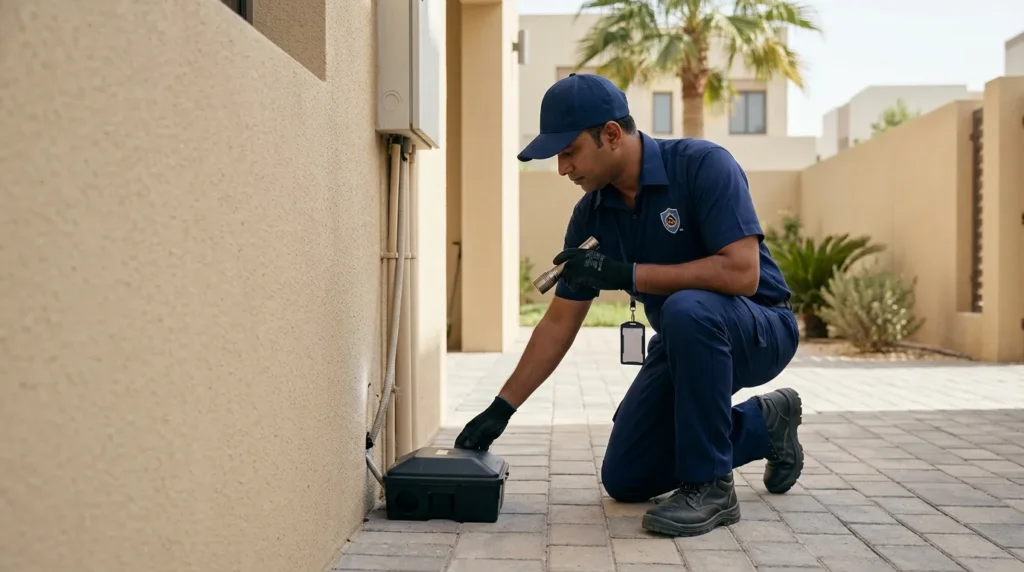
What the professionals do at Aura Pest Control:
- Site survey and inspection. We check droppings, rub marks, gnaw marks and entry points inside and outside, and identify the rat species and the level of activity.
- Treatment plan. We choose a combination of trapping and tamper-resistant bait stations for your property.
- Targeted rat treatment. Traps and stations go on the rat routes, not scattered around the home, and are monitored.
- Proofing advice. We show you the gaps to seal so the rats cannot return.
- Follow-up. We re-check after 3 days and again after 2 weeks, and our treatments come with a 3-month warranty.
See our rodent control service or read about rat control cost in the UAE. We serve homes and businesses across Dubai and Sharjah: see pest control in Dubai.
6. Preventing a return
Rats come back when food, shelter and entry points are still there. After treatment:
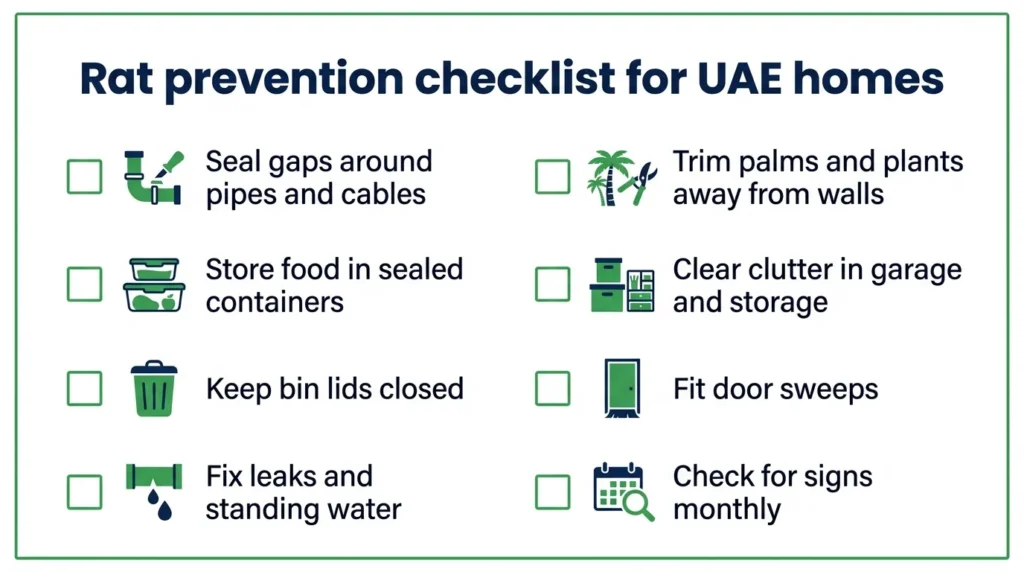
- Keep gaps sealed and check the seals every few months, especially around pipes, AC lines and roof edges.
- Store food in sealed containers, and keep bins closed and emptied daily.
- Keep gardens tidy: clear fallen fruit, trim palm fronds and branches near the roof, and move wood and boxes away from walls.
- Fix leaks and standing water.
- Inspect your home every month for droppings, gnaw marks or new noises.
- If you live in a building with recurring rats, ask building management to treat shared bin rooms, shafts and drains.
- For restaurants, offices and villas that keep seeing rodents, consider a pest control contract with scheduled checks.
7. Frequently asked questions
How long does it take to get rid of rats?
A small problem can be solved in a few days to two weeks if you seal entry points and trap correctly. Larger infestations can take several weeks, because rats are cautious, they must be trapped or baited over time, and the entry points have to be sealed afterwards. Follow-up checks confirm that activity has stopped.
What kills rats instantly?
Nothing safe and practical kills rats “instantly” apart from a well-placed snap or electronic trap, which kills within seconds. Poison baits take days, and rats can die in hidden spaces. Never use fumigation tablets or leftover chemicals in a home. Use traps, or ask a licensed company to use baits safely.
Do home remedies work to get rid of rats?
Mostly not. Sealing gaps, storing food properly and using snap traps work. Peppermint oil, perfumes, mothballs and ultrasonic devices are unreliable, and mothballs are dangerous. See the table in section 4.
Why do rats keep coming back?
Because the cause is still there: open entry points, food and water, or shelter in a ceiling, garden or shared building. Rats also come from neighbouring flats and gardens. Seal gaps, remove attractants, and follow up with a professional if signs return.
How do I find a rat in my house?
Look for droppings, gnaw marks and grease marks along walls and behind appliances, listen for scratching at night, and check false ceilings, cupboards, stores and cable runs. A torch and a night-time check help. A professional inspection can find entry points you may miss.
What should I do if there is a rat in the kitchen?
Do not leave food out, close the kitchen door at night, and put safe traps behind appliances. Throw away any food the rat touched and disinfect worktops. If it happens again, call a professional to find the entry point.
How do I tell rats from mice?
Rat droppings are larger, and rats are bigger with thicker bodies. Mouse droppings are small, like grains of rice. Rats leave bigger gnaw marks and stronger rub marks. The control steps are similar, but traps and bait stations must be sized and placed for the right animal.
Do you offer rat removal in Dubai and Sharjah?
Yes. Aura Pest Control offers rat treatment and rodent proofing across Dubai and Sharjah with same-day appointments and 24/7 emergency support, subject to availability.
Book rat control in Dubai or Sharjah
Heard scratching in the ceiling, or found droppings? Send us a message with a photo and your area, and we will arrange a free inspection.
- WhatsApp: +971 52 408 0230
- Call: +971 52 408 0230
- Email: info@aurapestcontrol.ae
- Rodent control | Pest control in Dubai | Contact us