
You have a bottle labelled “antiseptic disinfectant” in the cupboard, a hand sanitizer in your bag and a floor cleaner in the kitchen. Can you use them interchangeably? No, and mixing them up is a common mistake.
This guide explains the difference between an antiseptic, a disinfectant and a sanitizer, what each one does and when to use each one safely at home or at work.
Quick answer: what is the difference?
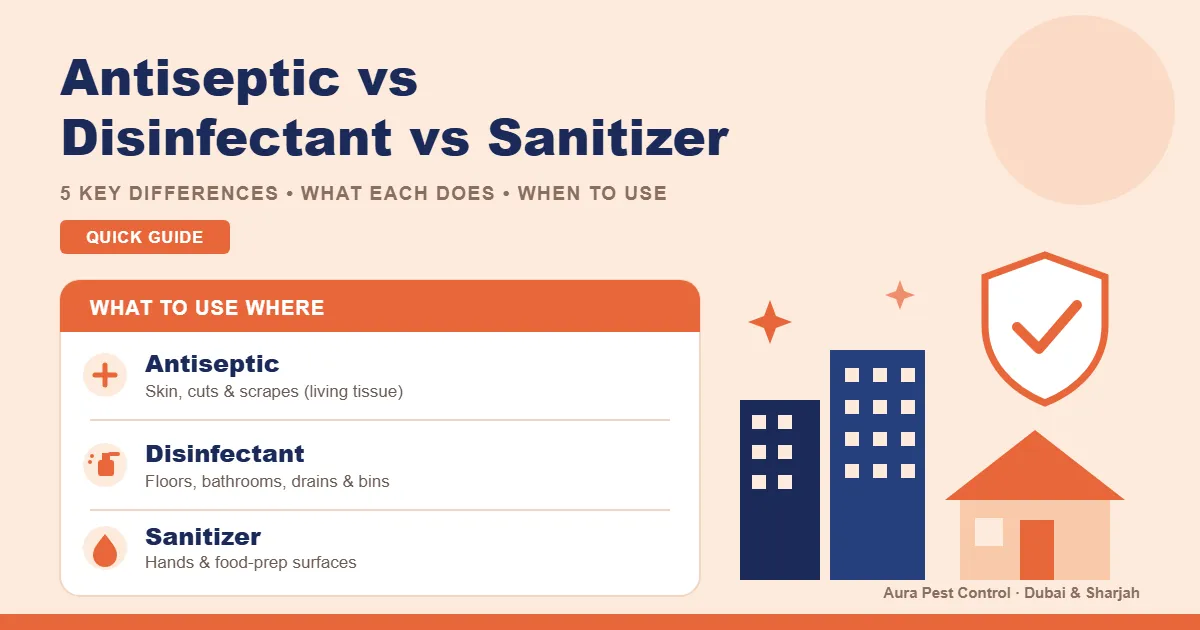
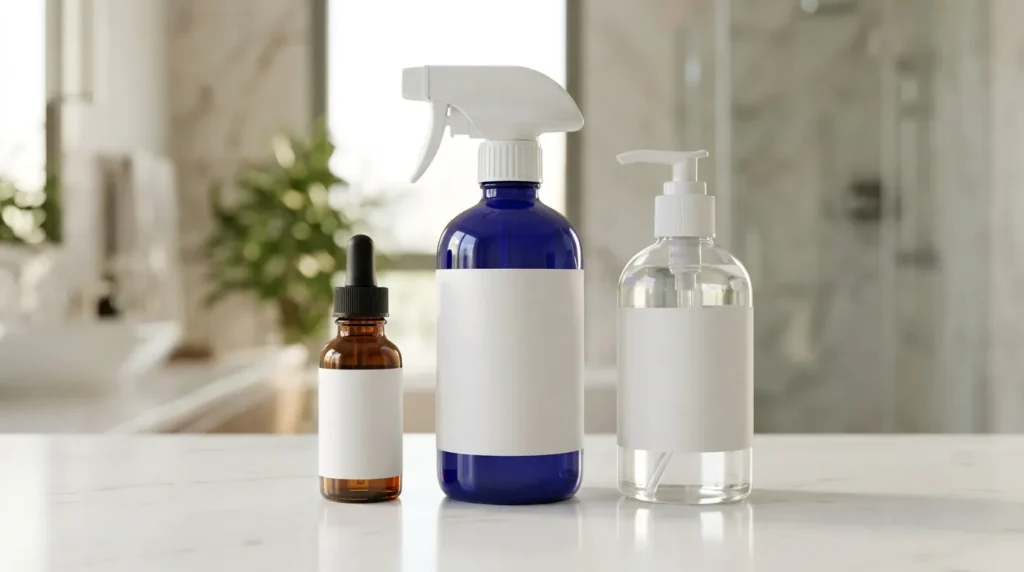
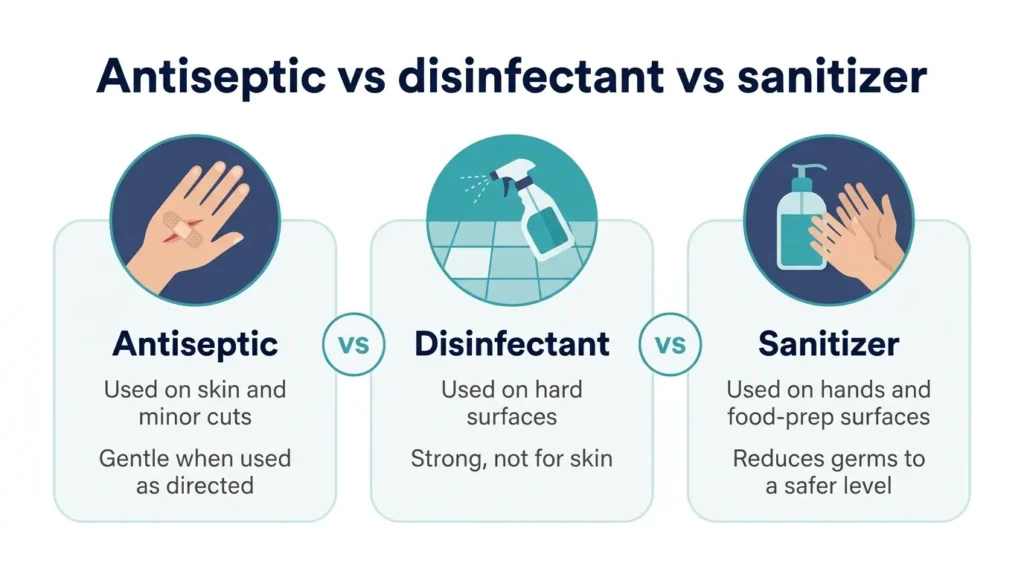
An antiseptic is for living tissue such as skin and minor wounds, a disinfectant is for non-living surfaces such as floors, bathrooms and drains, and a sanitizer reduces germs to a safer level on skin (hand sanitizer) or on surfaces such as food-contact areas. Disinfectants are generally stronger than sanitizers, and you should never use a surface disinfectant on skin unless the label says so.
| Antiseptic | Disinfectant | Sanitizer | |
|---|---|---|---|
| Used on | Skin, minor cuts, mucous membranes (as directed) | Hard, non-living surfaces | Hands, or surfaces such as kitchen counters |
| Goal | Reduce germs on living tissue | Kill or inactivate germs on surfaces | Reduce germs to a safer level |
| Strength | Gentle enough for skin when used as directed | Strong | Between cleaning and disinfecting |
| Example uses | Cleaning a scrape | Bathroom floors, drains, bins | Hands before eating, food prep surfaces |
| Safe on skin? | Yes, as directed | Not unless the label says so | Hand sanitizers: yes |
What is an antiseptic?
An antiseptic is a product used on living tissue to reduce the germs that could cause infection. Common examples include povidone-iodine, chlorhexidine and alcohol-based skin solutions. You use them on skin before an injection, on a small cut or scrape after washing, or on the skin around a wound. Follow the label for how much to use, whether it must be diluted and how long to leave it on. Antiseptics are not meant for cleaning floors, and they do not replace medical care for deep or dirty wounds.
What is a disinfectant?
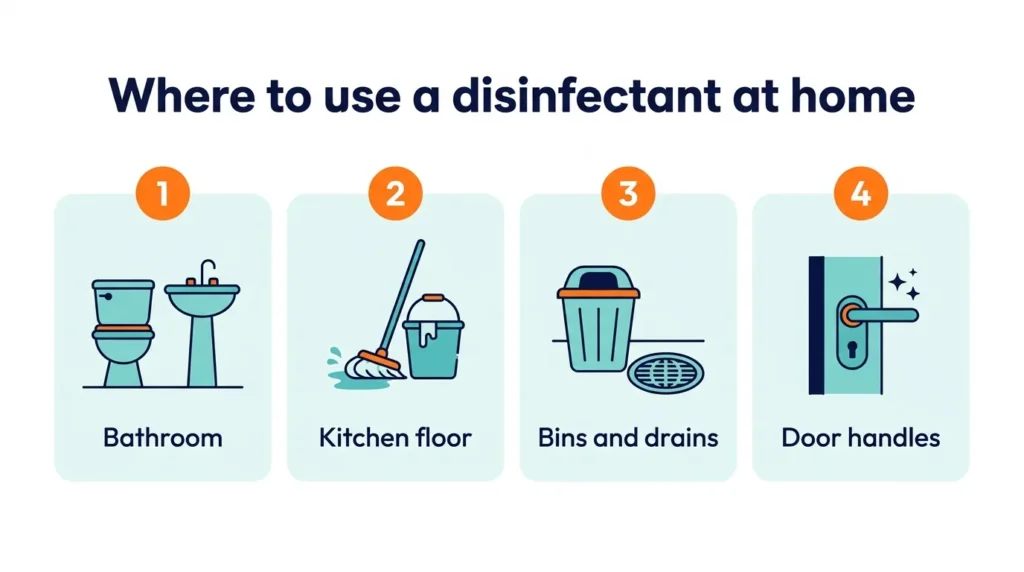
A disinfectant is a chemical product applied to hard surfaces to kill or inactivate germs. In practice, a disinfectant is for bathrooms, toilets, floors, bins, drains, door handles and similar surfaces. The label lists what it is effective against and for how long it must stay wet on the surface (the contact time).
What does a disinfectant do?
What does disinfectant do? It destroys or inactivates bacteria, and in many products viruses and fungi, on the surface it touches. Three things matter:
- It does not remove dirt. Clean the surface first, because dirt and grease can protect germs.
- It needs contact time. If you wipe it off too early, it has not finished working.
- It works only on what the label lists. Different products have different claims.
What are the uses of disinfectant?
The uses of disinfectant cover everyday home and workplace hygiene. What is the use of disinfectant in practice?
- Toilets, bathroom floors, sinks and showers.
- Kitchen floors, bins and drains.
- High-touch surfaces such as door handles, switches and rails.
- Nursery and children’s areas, using products labelled safe for that use and following rinse instructions.
- Offices, schools, gyms and shops.
- Areas affected by pests such as cockroaches or rodents, after the pest problem is treated and the area is cleaned. See our guides on how to get rid of cockroaches in Dubai and how to get rid of rats in the house.
- Water tanks and storage, which are cleaned and disinfected using specific procedures. See our guide to water tank cleaning and disinfection in Dubai.
What is a sanitizer?
A sanitizer reduces the number of germs on a surface or on skin to a level considered safe. The word covers two different products:
- Hand sanitizer is a skin product, usually alcohol-based. Health authorities such as the US CDC recommend products with at least 60% alcohol. Washing hands with soap and water is better when hands are visibly dirty or greasy.
- Surface sanitizer is used on surfaces such as kitchen counters, chopping boards and food-contact equipment. Many are made to be used without a rinse, and some are labelled specifically for food-contact surfaces.
A sanitizer is not the same as a disinfectant. It lowers the germ count but does not usually carry the same strong kill claims.
Antiseptic disinfectant: what does that label mean?
You may see liquids sold as “antiseptic disinfectant” in UAE shops. These are dual-purpose products. Typically the label gives one use for skin (diluted, for minor cuts and bites) and another for surfaces (diluted to a different strength for floors and drains). The dilution is different for each use, so follow the label exactly. Never use the surface dilution on skin, and never use a strong disinfectant concentrate on skin. If you are unsure, ask a pharmacist.
When to use each: quick guide
| Situation | Use this |
|---|---|
| Minor cut or scrape | Antiseptic, after washing the wound |
| Hands after being outside, no soap available | Hand sanitizer |
| Hands visibly dirty | Soap and water |
| Bathroom floor and toilet | Disinfectant |
| Kitchen counter where food is prepared | Surface sanitizer or food-safe disinfectant as labelled |
| Drains and bins | Disinfectant |
| Surfaces touched by someone ill | Clean, then disinfect |
| Water tank | Professional cleaning and disinfection |
Why is disinfection important?
Why disinfection is important comes down to stopping germs spreading from surfaces to people. Germs can survive on surfaces such as handles, floors and taps, especially in busy, humid or shared spaces. Regular cleaning and disinfection of key areas helps reduce the spread of illness, protects children and older family members, and matters after pest activity because pests such as cockroaches and rodents can carry germs onto surfaces. For a deeper comparison of services, see our guide to fumigation vs pest control vs disinfection.
How to use a disinfectant safely: 6 steps
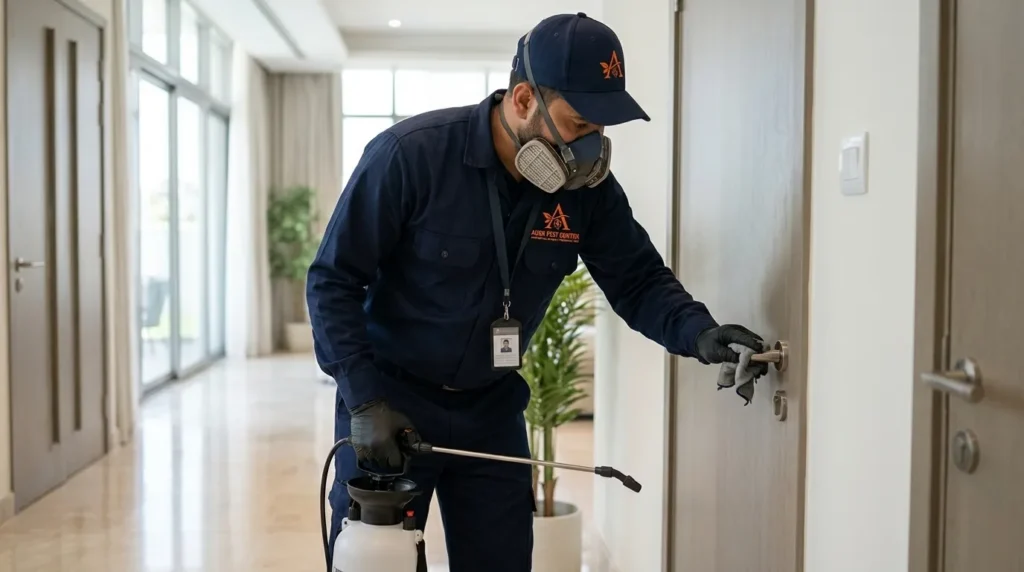
- Read the label. Check the surfaces it is safe for and the dilution.
- Clean first. Remove dirt and grease with detergent and water.
- Dilute exactly as directed. More is not better.
- Apply and keep the surface wet for the stated contact time.
- Rinse where the label says so, especially for surfaces that touch food or children’s mouths.
- Ventilate and store safely. Wear gloves, keep children and pets away while it dries, and store the product out of reach in its original container.
Never mix disinfectants. In particular, do not mix bleach with ammonia or with acidic cleaners, because this can release dangerous gases.
Common mistakes
- Using a floor disinfectant on skin.
- Spraying and wiping straight away.
- Using disinfectant on a dirty surface.
- Using hand sanitizer on visibly dirty hands instead of washing.
- Spraying disinfectant around food or on food-prep surfaces without checking the label.
- Mixing products.
Need professional disinfection?
For homes, offices, restaurants or warehouses, a licensed team can disinfect large or high-risk areas safely. See our disinfection services in Dubai and Sharjah, or read about pet-friendly pest control in Dubai if you have animals at home. Contact us for a quote.
Frequently asked questions
What is the difference between antiseptic and disinfectant? Antiseptics are used on living tissue such as skin. Disinfectants are used on non-living surfaces and are generally stronger.
Can I use disinfectant on my skin? Not unless the label says it is safe for skin and gives a skin dilution. Use an antiseptic or soap and water instead.
What does disinfectant do? It kills or inactivates germs on surfaces for the organisms listed on its label, provided the surface is clean and the contact time is followed.
What is the use of disinfectant? It is used on bathrooms, floors, bins, drains, high-touch surfaces and areas affected by illness or pests.
Is hand sanitizer an antiseptic? Hand sanitizers act as skin antiseptics, but they are a different product format. Soap and water are better when hands are dirty.
Is sanitizer stronger than disinfectant? No. Disinfectants are generally stronger. Sanitizers reduce germs to a safer level.
Do I need to clean before disinfecting? Yes. Dirt reduces how well a disinfectant works.
Is “antiseptic disinfectant” safe to use at home? Yes when used as the label directs, with the correct dilution for each use. Keep it away from children and pets.
Final thoughts
Use an antiseptic for skin, a disinfectant for surfaces and a sanitizer when you need a quick germ reduction on hands or food-prep areas. Read the label, clean first, follow the contact time and never mix products.
Related reading: water tank cleaning and disinfection in Dubai, fumigation vs pest control vs disinfection and what is pest control.