
You hear scratching in the ceiling at 2 a.m. Then you find droppings behind the cooker, or a chewed cable behind the TV. In Dubai’s warm climate, rodents never face a cold season that slows them down, so a few sightings can turn into a full infestation fast.
This guide explains when to call a rodent exterminator in Dubai, what the visit involves step by step, and what you should expect to pay.
Short answer: A rodent exterminator is a licensed pest control professional who finds how rats or mice are getting in, removes them with traps or secured bait stations, seals the entry points and returns to confirm the problem is gone. Call one when you see droppings, hear scratching in walls or ceilings, spot rodents in daytime, find gnawed wiring, or when DIY traps have failed. In Dubai, published price guides put rodent control at roughly AED 250 to AED 1,500, depending on property size and how severe the infestation is.
What Does a Rodent Exterminator Do?
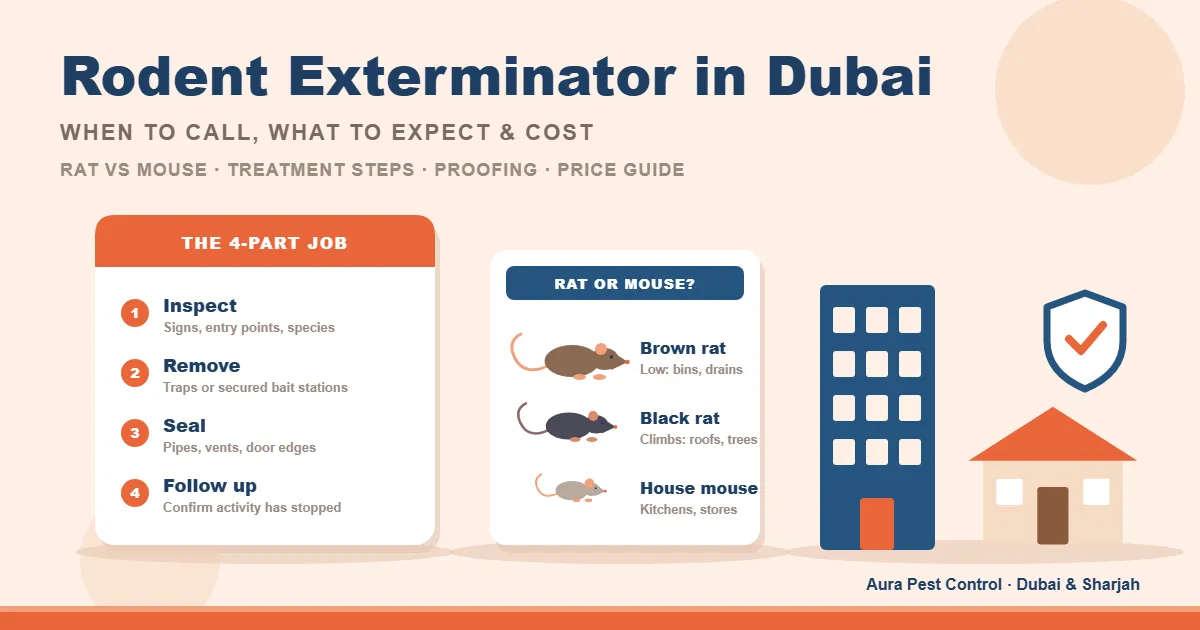
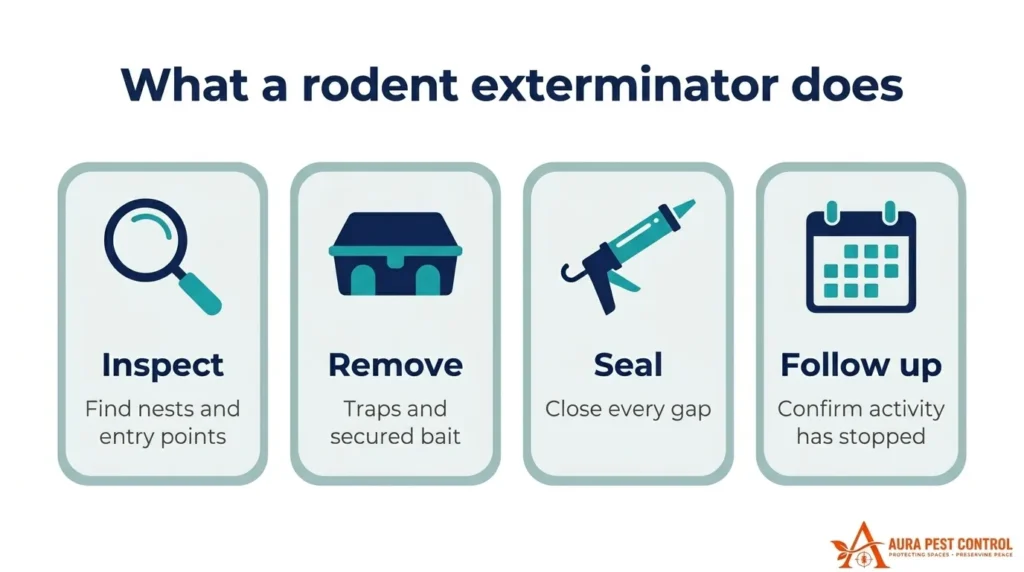
A rodent exterminator does more than set a few traps. The job has four parts: finding the rodent and where it nests, removing the population, closing the gaps it used to get in, and checking that it has not returned.
The work usually includes:
- Inspecting the property for droppings, gnaw marks, grease rub marks and nesting spots
- Identifying whether you have rats, mice or both
- Placing snap traps or tamper-resistant bait stations where activity is highest
- Sealing entry points such as pipe gaps, vents and door edges
- Cleaning and disinfecting areas contaminated by droppings and urine
- Booking a follow-up visit to confirm activity has stopped
If you want the bigger picture of how professional treatment works, read our guide on what is pest control and see our pest control services in Dubai.
Rat Exterminator vs Mouse Exterminator: Does the Rodent Matter?
In practice, one company covers both, so a rat exterminator, a mouse exterminator and a mouse and rat exterminator are usually the same service. The difference is in the method. Rats and mice behave differently, so a technician who gets the species wrong will place traps in the wrong spots. Searching for a “rat and mice exterminator” or a “mice exterminator” simply means you want a provider who handles both.
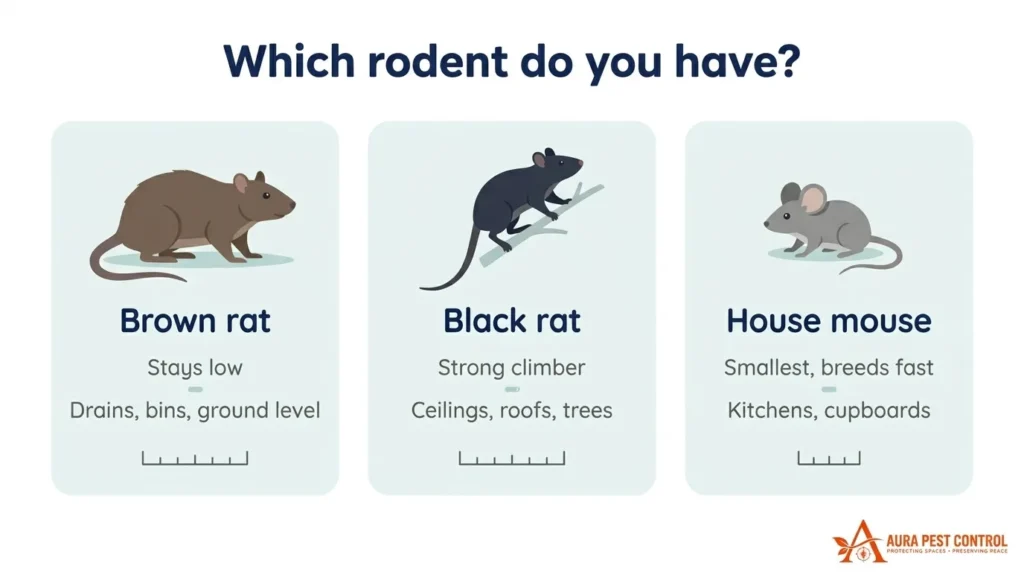
Here is how the three common rodents in Dubai differ:
| Rodent | Size and behaviour | Where you find it | Typical entry points |
|---|---|---|---|
| Brown rat (Norway rat) | Largest of the three, stays low | Near waste rooms, gardens, parking areas, drains | Drains, cracks near ground level |
| Black rat (roof rat) | Smaller, strong climber | Ceilings, lofts, upper floors, palm trees | Roof gaps, balconies, trees touching the building |
| House mouse | Smallest, breeds the fastest | Kitchens, cupboards, storage rooms | Gaps about the width of a coin |
Villas with trees or rooftop access tend to see black rats. Ground-floor flats near bins and drains tend to see brown rats. Mice turn up almost anywhere there is food.
Signs You Need a Rodent Exterminator
Rodents are mostly active at night, so you often notice the signs before you ever see the animal. Look for these:
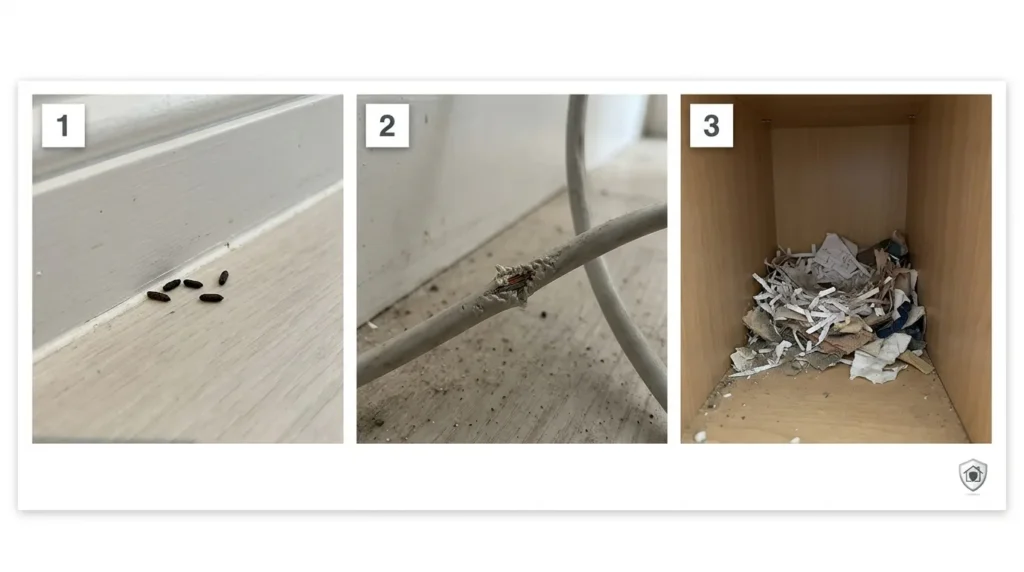
- Droppings near food storage, behind appliances or along walls
- Gnaw marks on packaging, furniture, skirting or wiring
- Scratching or scurrying in walls or ceilings after dark
- A musty, ammonia-like smell in cupboards or storage rooms
- Grease marks along walls where they travel
- Nests made of shredded paper, fabric or insulation
- Damaged food packaging in the kitchen or pantry
- Daytime sightings, which usually mean a large population is already established nearby
Two or more of these signs together mean it is time to act.
When to Call a Rodent Exterminator (and When DIY Is Enough)
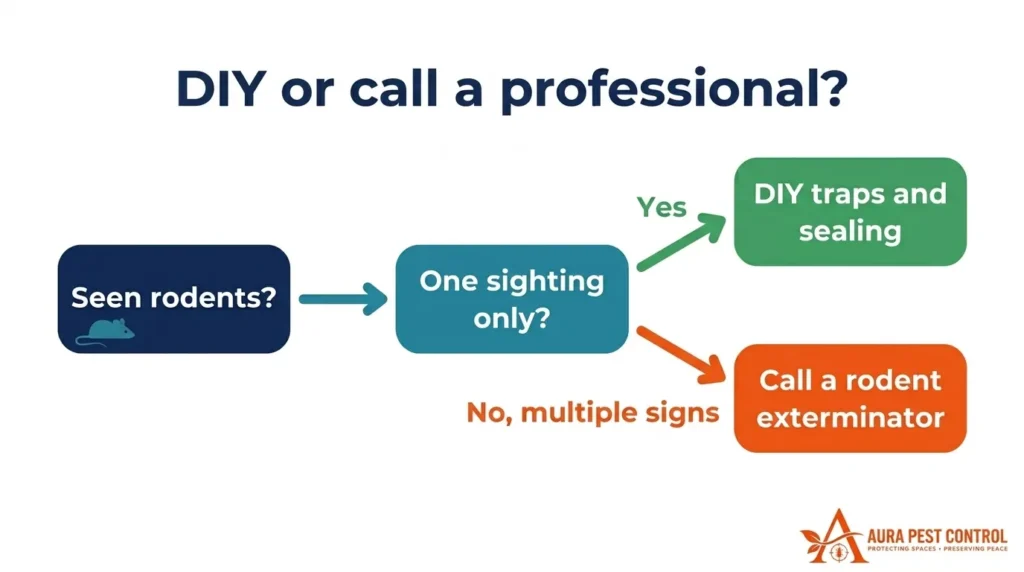
One mouse in a store room can sometimes be handled with a few snap traps and a good clean-up. A rodent problem is different, because traps alone rarely reach rodents already nesting inside walls, ceilings or under floors.
Call a professional rodent exterminator if:
- You see droppings or hear scratching in more than one room
- You have seen a rat or mouse in daytime
- You find chewed electrical wiring, which is a fire risk
- DIY traps have caught something but signs keep coming back
- You run a restaurant, café, warehouse or shop where food safety rules apply
- Children, pets or elderly family members live in the home
DIY is reasonable only for a single, isolated sighting. Even then, seal the entry point and store food in airtight containers or the problem often returns. If you want to try first, see our guides on how to get rid of rats in the house and how to trap a rat.
What to Expect From a Rodent Exterminator
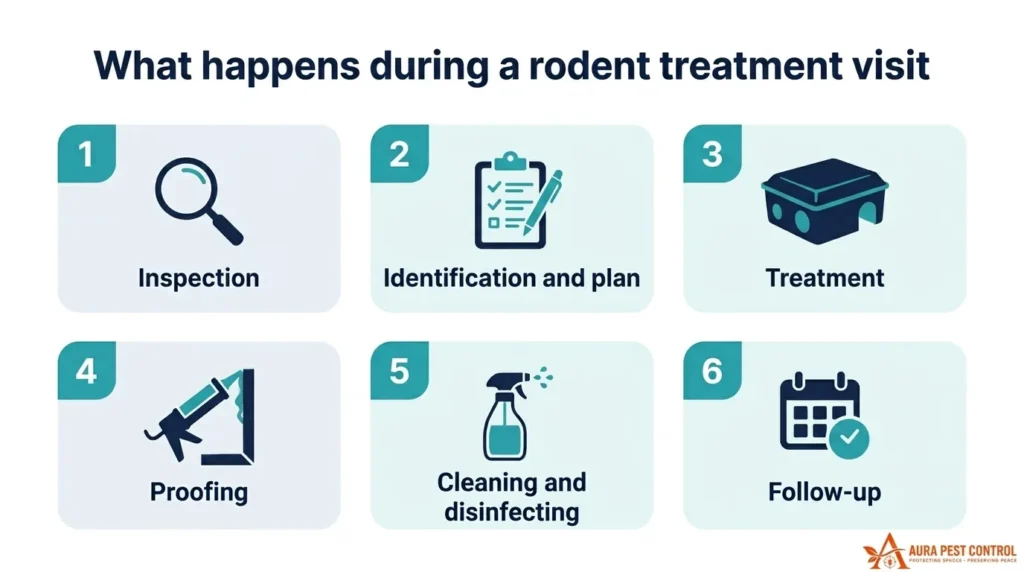
A good visit follows a clear process. Here is what happens, step by step:
- Inspection. The technician checks kitchens, ceilings, balconies, gardens, drains and storage areas to find activity and entry points.
- Identification and plan. They confirm if it is rats, mice or both, then explain the treatment before starting.
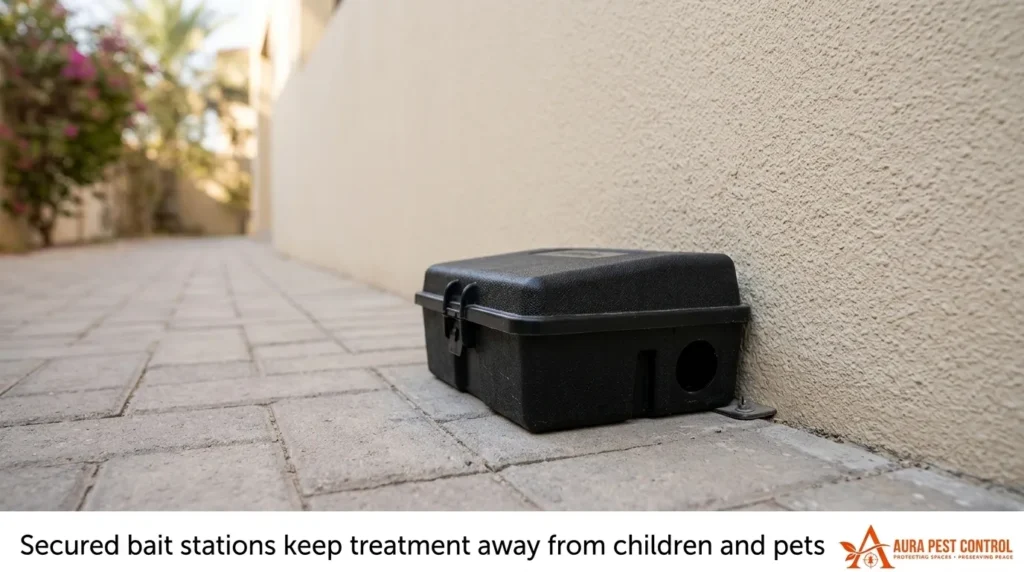
- Treatment. Traps or secured bait stations go where activity is highest, kept out of reach of children and pets.
- Proofing. Gaps around pipes, vents, doors and cable entries are sealed so new rodents cannot get in.
- Cleaning and disinfecting. Droppings and urine are removed safely and the area is sanitised. See our guide on disinfectant vs antiseptic vs sanitizer for what is safe to use at home, or ask about our disinfection services.
- Follow-up. The technician returns to check traps, remove carcasses and confirm no new activity.
Before the visit, clear space around skirting boards, move food into sealed containers and tell the technician where you have seen signs.
Rat Exterminator Cost in Dubai (Rat Exterminator Price Guide)
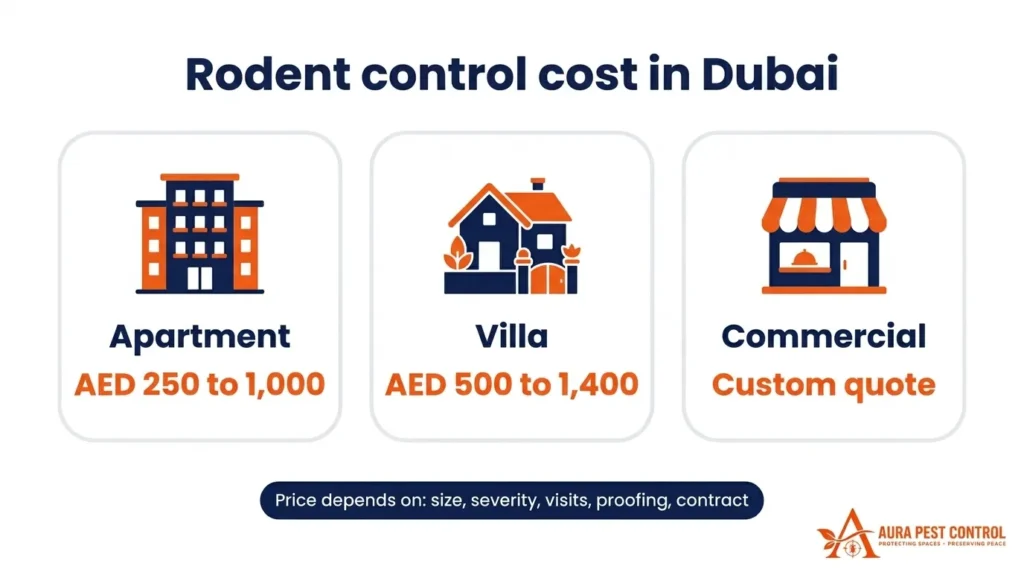
The rat exterminator cost in Dubai depends on property size, how bad the infestation is and how many visits you need. Published Dubai price guides show a wide spread, and the same job can be quoted at very different prices. For a UAE-wide breakdown, see our rat control cost guide.
| Property | Approximate range (AED) |
|---|---|
| Studio or 1-bedroom apartment | 250 to 700 |
| 2 to 3-bedroom apartment | 400 to 1,000 |
| Villa (indoors and garden) | 500 to 1,400 |
| Restaurant, warehouse or office | Custom quote |
These ranges come from published Dubai price guides and vary by provider. [REPLACE with Aura Pest Control’s own starting prices before publishing.]
What changes the rat exterminator price:
- Property size and type. Larger homes and villas with gardens take longer to inspect and treat.
- Severity. A few mice cost less to clear than a nesting colony of rats.
- Number of visits. Follow-ups improve results and add to the total.
- Proofing work. Sealing entry points costs more than treatment alone but stops the problem returning.
- Contract type. One-off treatment is cheaper upfront. Annual pest control contracts usually cost less per visit and catch problems early.
Be careful with very cheap quotes. A price far below the usual range often means a single visit with no sealing and no follow-up, which is why rodents return.
How to Choose a Rodent Exterminator in Dubai
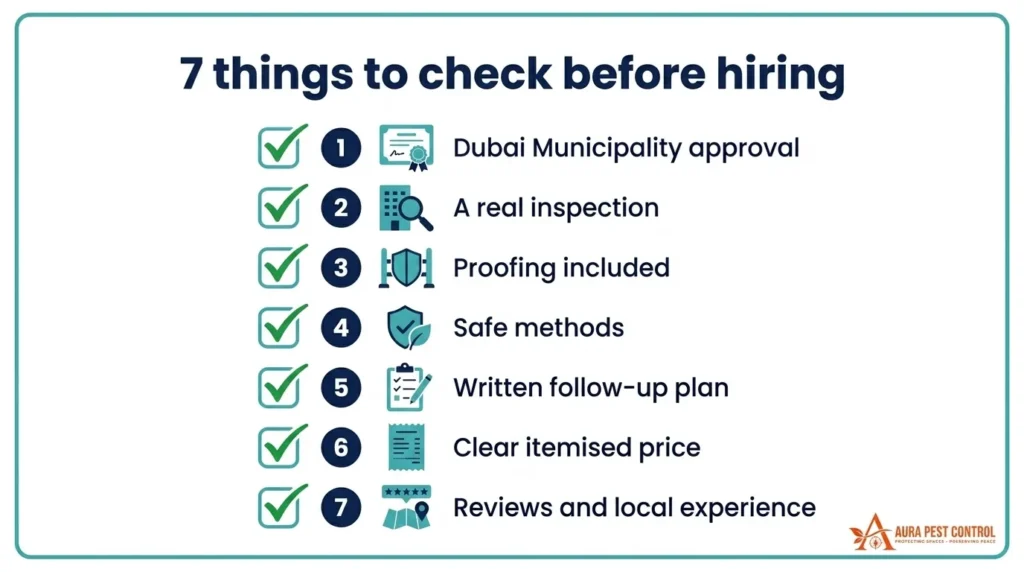
Not every provider is equal, so check these points before you book:
- Dubai Municipality approval. Pest control companies in Dubai need a No Objection Certificate from Dubai Municipality’s Public Health Pest Control Section. Ask to see the licence, and read our guides on how to verify Dubai Municipality-approved pest control and the Dubai Municipality pest control rules.
- A real inspection. Avoid anyone who quotes without asking what signs you have seen.
- Proofing included. Treatment without sealing entry points is only temporary.
- Safe methods. Ask what is used and how it is secured around children and pets. See our guide to pet-friendly pest control in Dubai.
- A written follow-up plan. You should know when the technician returns and what happens if activity continues.
- A clear, itemised price. No surprise call-out or per-room fees.
- Reviews and local experience. Look for work in your type of property and community. Our checklist for the best pest control company in Dubai can help.
Rodent Control by Property Type
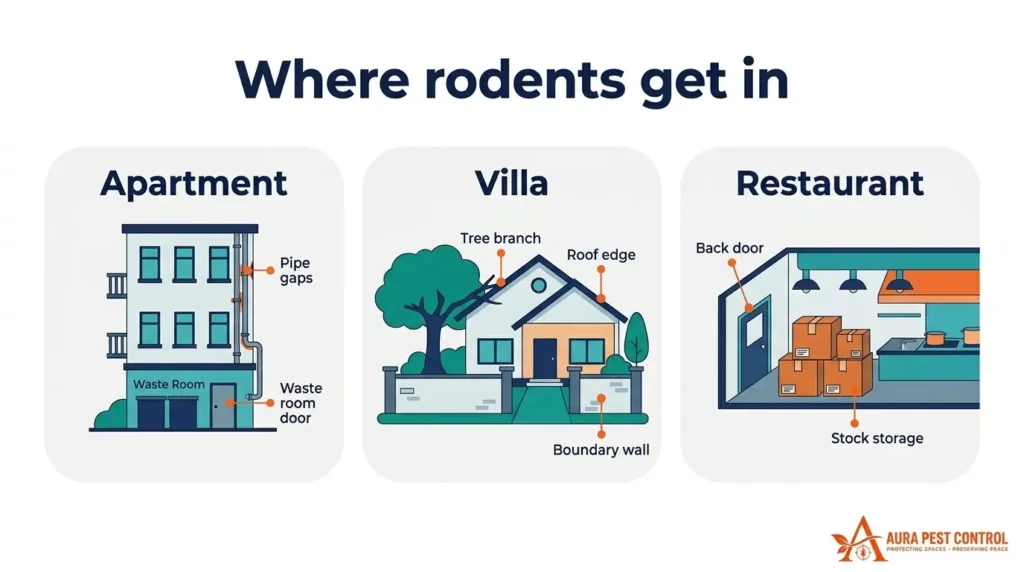
Rodent problems look different depending on where you live.
- Apartments: Mice and rats travel through shared walls, pipes and waste rooms. Treat early and keep neighbours informed, since one flat’s problem often spreads. See our home pest control in Dubai page.
- Villas: Black rats climb from trees, roofs and boundary walls. Cutting back branches and sealing roof edges matters as much as the treatment. See our guide to outdoor pest control for villas.
- Restaurants, warehouses and shops: Food, stock and cardboard give rodents everything they need. Keep a clear gap along walls, store stock off the floor and book regular inspections with commercial pest control in Dubai and Sharjah.
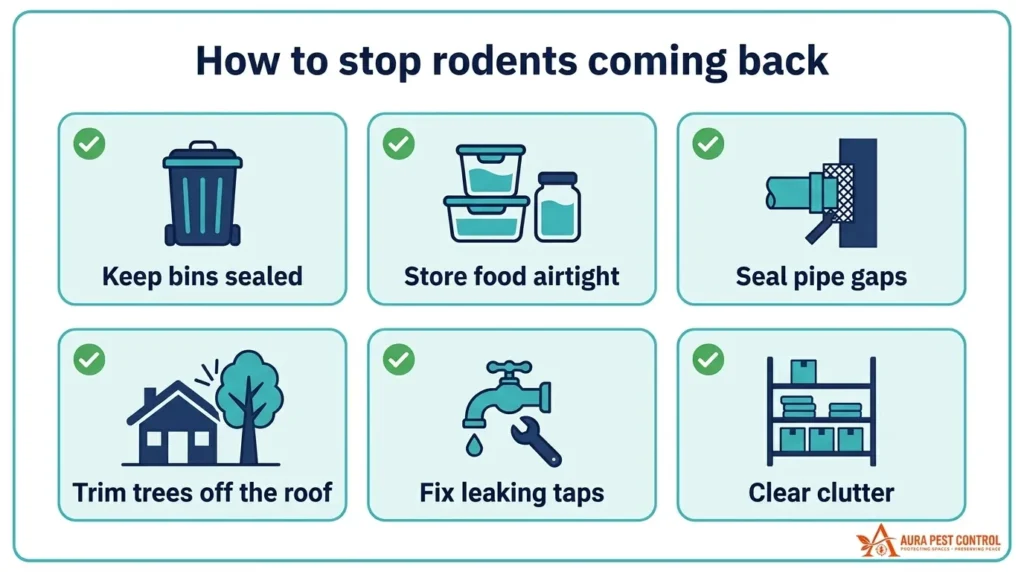
How to Stop Rodents Coming Back
Treatment clears the current population. Prevention keeps the problem from returning.
- Seal gaps around pipes, vents and doors with steel wool, caulk or metal mesh
- Store food, pet food and rice in airtight containers
- Keep bins sealed and emptied often
- Fix leaking taps and pipes, since rodents need water too
- Trim trees and plants that touch the roof or walls
- Clear clutter in garages and store rooms
- Book periodic inspections if you live near bins, construction sites or green areas
Other pests follow the same rule: remove food, water and shelter. Our guide to how to get rid of pests covers the basics.
Why Choose Aura Pest Control for Rodent Control in Dubai
[ADD: Aura-specific points – Dubai Municipality approval or licence line, years in operation, areas served in Dubai and Sharjah, same-day availability, warranty or follow-up policy, treatment safety for children and pets. I did not invent any of these.]
Ready to get rid of rats or mice? Book a rodent control inspection or call [ADD: phone / WhatsApp]. We also cover rodent control in Sharjah.

Frequently Asked Questions
How much does a rodent exterminator cost in Dubai?
Most published price guides show rodent control at roughly AED 250 to AED 1,500 in Dubai. Apartments sit at the lower end, villas and heavy infestations at the higher end, and commercial sites are quoted individually.
What is the difference between a rat exterminator and a mouse exterminator?
There is usually no difference in the company, since the same team treats both. The method differs because rats and mice nest, travel and enter in different ways, so the technician adjusts trap and bait placement to the species.
How long does rodent treatment take?
The first visit covers inspection, treatment and sealing. Most infestations then need at least one follow-up to confirm activity has stopped, so ask your provider for a timeline based on what they find.
Is rodent control safe for pets and children?
It can be, when the technician uses secured bait stations and places them out of reach. Tell the technician about pets and children before treatment so they plan around them. Read more about pet-friendly pest control in Dubai.
Can I get rid of rats and mice myself?
For a single, isolated sighting, snap traps and sealing can work. For repeated signs, droppings in several rooms or rodents nesting in walls, a professional is more reliable, because DIY traps rarely reach the nest.
Do I need a Dubai Municipality-approved rodent exterminator?
Yes, choose an approved company. Dubai Municipality regulates pest control providers, so check the licence before you book. Our guide shows how to verify a Dubai Municipality-approved pest control company.
Why do rodents keep coming back after treatment?
Usually because entry points were not sealed or food and water sources are still available. Proofing and good storage habits prevent a repeat infestation.
What attracts rats and mice to my home in Dubai?
Food waste, open bins, pet food, leaking pipes, cluttered storage and gaps in walls and roofs. Trees touching the building also give rats a route to the roof.
Final Thoughts
Rodents damage wiring, contaminate food and spread quickly, so waiting rarely helps. A good rodent exterminator inspects first, treats safely, seals entry points and checks back, which is what stops the problem returning. Compare prices, check the licence and ask about follow-up before you book.
Have signs of rats or mice at home or at work? Contact Aura Pest Control for an inspection or learn more about our rat control in Dubai service.